
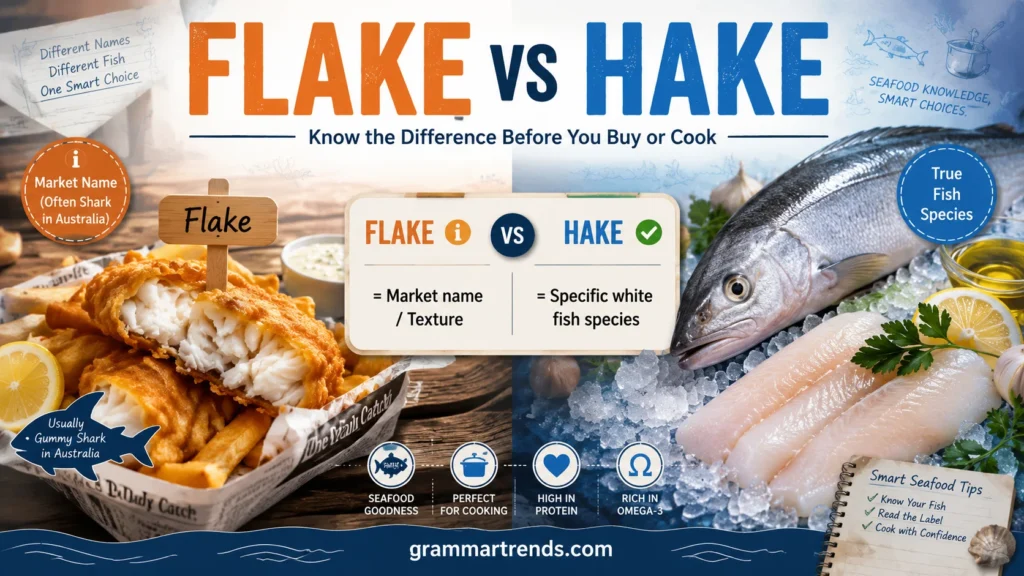
If you’ve ever found yourself standing at a seafood counter wondering whether to choose flake or hake, you’re certainly not alone. The flake vs hake debate has puzzled home cooks, seafood lovers, restaurant diners, food bloggers, and even professional chefs for years. At first glance, these two types of white fish appear remarkably similar. Both have a mild flavor, a light-colored flesh, and a delicate texture that works well in a wide range of recipes. Because of these similarities, many people assume they are simply two different names for the same fish. In reality, that couldn’t be further from the truth.
The confusion often starts with the names themselves. Unlike hake, which refers to a specific group of fish belonging to the cod family, flake is not always a single species. In countries such as Australia, the word flake commonly refers to the flesh of certain shark species served in fish and chip shops. In other regions, however, the term may simply describe fish that naturally separates into soft flakes when cooked. These different meanings have created years of misunderstanding among consumers, recipe writers, and seafood retailers.
Understanding the difference between flake and hake is useful for more than satisfying your curiosity. It can help you buy the right fish for a recipe, make better choices at restaurants, understand seafood labels, and even write about seafood more accurately. Whether you’re preparing crispy fish and chips, baking healthy fillets, grilling seafood for dinner, or comparing fish varieties for nutritional value, knowing which fish you’re using makes a noticeable difference in taste, texture, cooking methods, and sustainability.
Quick Answer
The main difference between flake and hake is that hake is a specific species of fish, while flake is usually a market name for certain shark species or other fish, depending on the country. Hake belongs to the cod family and has a soft, mild, slightly sweet flavor, making it popular for baking, grilling, and pan-frying. Flake, especially in Australia, commonly refers to gummy shark and has firmer flesh with larger flakes, making it a favorite for traditional fish and chips. Although both are white fish with a mild taste, they differ in origin, texture, and culinary use.
Flake vs Hake: Quick Comparison
Before diving deep, here’s the short version.
| Feature | Flake | Hake |
| Meaning | A texture or cooking description | A species of fish |
| Category | Culinary term | Actual seafood type |
| Flavor | Depends on fish used | Mild and slightly sweet |
| Texture | Soft layers that separate easily | Tender and delicate |
| Common Recipes | Fish tacos, sandwiches, chowders | Frying, baking, grilling |
| Nutritional Value | Varies by species | Lean protein, low fat |
| Confused Often? | Yes | Yes |
The simplest way to remember it is this:
All hake can be flaky, but not all flaky fish are hake.
That single sentence clears up most of the confusion.
What Does “Flake” Mean in Cooking?
When chefs say a fish “flakes nicely,” they’re talking about texture.
A flaky fish separates into soft layers when cooked. You can press it gently with a fork and the flesh breaks apart into clean sections. Think of it like pages separating in a book.
That flaky structure happens because fish muscle fibers and connective tissues loosen during cooking.
Some fish naturally flake more than others.
Fish Commonly Described as Flaky
Several seafood varieties fall into the flaky category:
- Cod
- Haddock
- Pollock
- Halibut
- Tilapia
- Salmon
- Hake
Each fish tastes different. However, they share one thing in common: layered flesh that separates easily after cooking.
What Makes Fish Flake Apart?
The texture comes down to biology and heat.
Fish muscle fibers are shorter than beef or chicken fibers. They also contain less connective tissue. When heat reaches the proteins, the fibers loosen quickly and separate into flakes.
Here’s what affects flakiness most:
Moisture Content
Fish with balanced moisture stay tender instead of rubbery.
Too much moisture creates mushiness. Too little creates dryness.
Fat Levels
Lean fish like hake and cod produce lighter flakes. Oily fish like salmon create richer, silkier flakes.
Cooking Temperature
High heat can destroy delicate flakes fast.
That’s why overcooked white fish turns chalky.
Freshness
Fresh fish keeps its structure better. Older fish becomes soft and breaks unevenly.
Signs a Fish Has Good Flaky Texture
You can spot perfectly cooked flaky fish in seconds.
Look for:
- Flesh that separates easily with a fork
- Moist appearance
- Defined layers
- Slight firmness without toughness
- No translucent center
Bad flaky fish usually looks:
- Mushy
- Watery
- Dry
- Crumbly
- Stringy
A perfectly flaky fish should almost melt in your mouth without falling apart into paste.
What Is Hake Fish?
Now let’s talk about hake itself.
Hake is a saltwater white fish from the cod family. It’s especially popular in Europe, South America, and coastal regions where seafood dominates local cuisine.
The fish belongs to the Merlucciidae family and appears in both Atlantic and Pacific waters.
Hake has become a favorite among chefs because it offers:
- Mild flavor
- Soft texture
- Affordable pricing
- Fast cooking time
- Excellent versatility
Many restaurants use hake as a lower-cost alternative to cod.
Types of Hake You’ll Commonly Find
Not all hake species taste identical. Several commercial varieties dominate seafood markets.
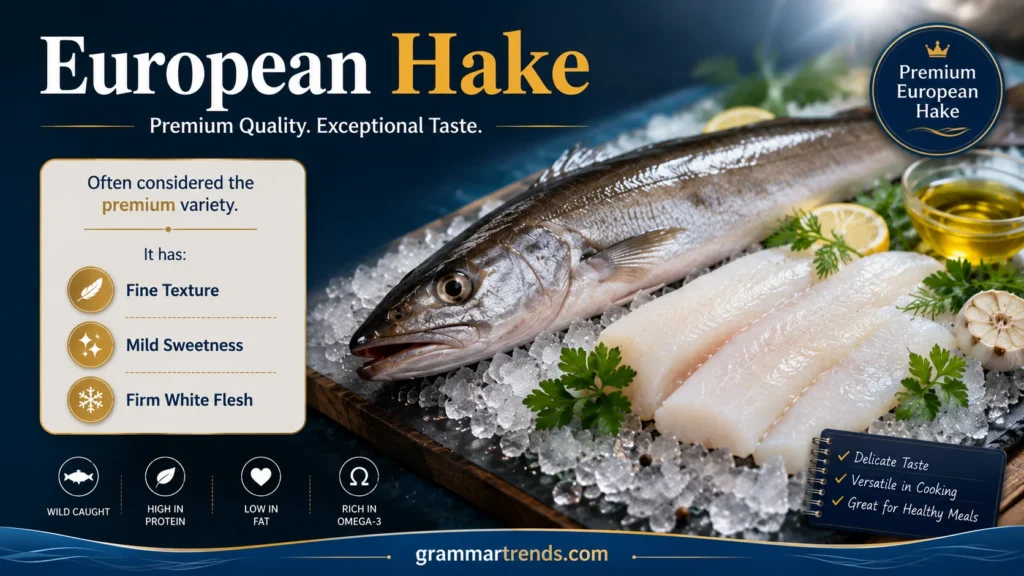
European Hake
Often considered the premium variety.
It has:
- Fine texture
- Mild sweetness
- Firm white flesh
Popular in Spain, Portugal, and France.
Pacific Hake
Common in North America.
Usually:
- Softer
- Slightly milder
- Budget-friendly
Frequently used in frozen seafood products.
Argentine Hake
A lean white fish with slightly firmer flesh.
Excellent for:
- Baking
- Frying
- Fish stews
Silver Hake
Smaller and softer than other species.
Best used in:
- Fish cakes
- Chowders
- Breaded recipes
What Does Hake Taste Like?
Hake tastes clean, mild, and slightly sweet.
It doesn’t have the “fishy” punch some seafood carries. That makes it ideal for people who normally avoid seafood.
Its flavor sits somewhere between:
- Cod
- Haddock
- Pollock
The texture feels:
- Tender
- Moist
- Delicate
- Lightly flaky
Because hake absorbs seasoning well, it works beautifully with:
- Garlic
- Lemon
- Butter
- Paprika
- Parsley
- Cajun spices
- Herbs
Is Hake Healthy?
Absolutely.
Hake is one of the leanest white fish options available.
Nutritional Snapshot of Hake
| Nutrient | Approximate Amount Per 100g |
| Calories | 90–100 |
| Protein | 18–20g |
| Fat | 1–2g |
| Omega-3 | Moderate |
| Carbohydrates | 0g |
Key Benefits
- High protein
- Low saturated fat
- Rich in selenium
- Good source of vitamin B12
- Supports heart health
- Lower mercury than larger predator fish
That combination makes hake popular among:
- Athletes
- Weight-loss diets
- Mediterranean diet followers
- High-protein meal plans
Flake vs Hake: The Biggest Differences Explained
This is where the confusion ends.
One Is Texture. The Other Is Species.
“Flake” describes how fish behaves when cooked.
“Hake” names a real fish.
That’s the core difference.
Imagine comparing:
- “Crunchy” vs “potato”
- “Juicy” vs “steak”
One describes texture. The other describes the food itself.
Texture Comparison: Flake vs Hake
Hake itself is flaky. However, its flakes are more delicate than cod.
| Fish | Texture |
| Cod | Large, firm flakes |
| Haddock | Medium flaky texture |
| Hake | Soft, delicate flakes |
| Tilapia | Fine flakes |
| Pollock | Tender flakes |
Hake breaks apart faster during cooking. That makes timing extremely important.
Flavor Comparison
Hake carries a gentler flavor than many white fish.
| Fish | Flavor Strength |
| Hake | Mild |
| Cod | Mild-medium |
| Haddock | Slightly sweet |
| Pollock | Neutral |
| Sardines | Strong |
Because hake tastes so clean, it acts like a blank canvas.
That versatility explains why it works across:
- Mediterranean cooking
- British fish and chips
- Latin seafood dishes
- Asian-inspired recipes
Best Ways to Cook Hake
Hake cooks quickly. That’s both its strength and its weakness.
Treat it gently and you’ll get buttery, flaky perfection.
Cook it too long and it dries faster than spilled coffee on hot pavement.
Pan-Fried Hake
Pan-frying creates crispy edges while preserving moisture.
Best Tips
- Pat fish dry first
- Use medium heat
- Don’t overcrowd the pan
- Flip only once
Best Seasonings
- Lemon pepper
- Garlic butter
- Smoked paprika
- Sea salt and parsley
Ideal Cooking Time
About 3–4 minutes per side depending on thickness.
Oven-Baked Hake
Baking works wonderfully because hake stays tender under controlled heat.
Ideal Oven Temperature
- 375°F to 400°F
Best Additions
- Cherry tomatoes
- Olive oil
- Garlic
- White wine
- Fresh herbs
Wrap hake in parchment paper for extra moisture retention.
That technique keeps delicate flakes intact.
Grilled Hake
Grilling adds smoky depth but requires care.
Hake can stick or fall apart easily.
How to Prevent Breakage
- Oil the grill grates
- Use skin-on fillets
- Avoid excessive flipping
- Cook over medium heat
A fish basket helps tremendously.
Air Fryer Hake
Air fryers work surprisingly well with hake.
The circulating heat creates crisp edges without heavy oil.
Quick Air Fryer Method
- Temperature: 390°F
- Time: 8–10 minutes
- Light oil coating recommended
Breadcrumb coatings perform especially well.
Best Dishes for Flaky Fish
Flaky fish shines in recipes where texture matters.
Fish Tacos
Soft flaky fish folds beautifully into tortillas.
Best options:
- Hake
- Cod
- Pollock
Why Flaky Texture Matters
You want fish that breaks apart easily without becoming mushy.
Hake delivers exactly that.
Fish and Chips
British-style fish and chips traditionally use:
- Cod
- Haddock
- Hake
Hake has become increasingly popular because it costs less while still creating crisp battered fillets.
Seafood Chowder
Delicate white fish gives chowder richness without heaviness.
Hake works well because:
- It cooks quickly
- Absorbs broth flavor
- Adds soft texture
However, add it near the end to avoid disintegration.
Fish Sandwiches and Wraps
Flaky fish creates excellent bite texture.
It pairs well with:
- Tartar sauce
- Slaw
- Pickles
- Spicy mayo
Crispy hake sandwiches have exploded in popularity across casual seafood restaurants.
Can You Substitute Hake for Other Fish?
Usually, yes.
Hake substitutes easily for many white fish recipes.
Best Hake Substitutes
| Substitute | Similarity Level |
| Cod | Very high |
| Haddock | High |
| Pollock | Moderate |
| Tilapia | Moderate |
| Whiting | High |
When Hake Works Better Than Cod
Hake actually beats cod in certain situations.
Budget Cooking
Hake usually costs less.
Faster Weeknight Meals
Its thinner fillets cook quickly.
Lighter Texture Preferences
Some people prefer hake’s softer bite.
When You Should Avoid Substituting Hake
Hake isn’t perfect for every recipe.
Avoid it for:
- Heavy stews
- Long braising
- Thick grilling cuts
- Aggressive smoking
Its delicate texture can collapse under prolonged cooking.
Read more: Wise vs Wize: What’s Correct and When to Use Each?
Common Mistakes People Make With Hake and Flaky Fish
Tiny mistakes can ruin delicate seafood.
Here’s what happens most often.
Overcooking the Fish
This is enemy number one.
Hake cooks incredibly fast.
The difference between moist and dry may be less than two minutes.
Internal Temperature Guide
| Doneness | Temperature |
| Safe minimum | 145°F |
| Ideal texture | 140–145°F |
Pull hake off heat slightly early because carryover cooking continues afterward.
Using Too Much Seasoning
Hake has subtle flavor.
Overpowering it with aggressive spice blends defeats the point.
Better Flavor Pairings
- Lemon
- Dill
- Butter
- Garlic
- Thyme
- Parsley
Think balance, not brute force.
Choosing the Wrong Cooking Method
Fragile fish requires gentler techniques.
Very high heat can:
- Tear flesh
- Dry flakes
- Cause sticking
Moderate heat wins almost every time.
Confusing Texture With Species
This mistake creates endless recipe confusion online.
Remember:
- Flake = texture
- Hake = fish
Simple.
How to Buy Fresh Hake
Fresh seafood quality changes everything.
Good hake tastes clean and delicate.
Poor hake tastes muddy and unpleasant.
What Fresh Hake Should Look Like
Fresh Hake Checklist
- Bright flesh
- Moist appearance
- Mild ocean smell
- Firm texture
- No sliminess
Avoid:
- Strong ammonia odor
- Yellowing flesh
- Excess liquid
Fresh fish should smell like the sea, not like a forgotten cooler.
Fresh vs Frozen Hake
Frozen hake often surprises people.
Modern flash-freezing preserves texture remarkably well.
Fresh Hake Pros
- Better texture
- Cleaner flavor
- Ideal for grilling
Frozen Hake Pros
- Cheaper
- Convenient
- Longer shelf life
For most home cooks, high-quality frozen hake works perfectly fine.
Sustainability and Fishing Practices
Sustainable seafood matters more than ever.
Some hake fisheries operate responsibly while others struggle with overfishing concerns.
Look for Certifications
- MSC certification
- Traceable sourcing
- Wild-caught labeling
European hake fisheries have improved significantly in sustainability practices during recent years.
How to Store Hake Properly
Seafood spoils fast.
Proper storage protects both flavor and safety.
Refrigeration Tips
Store fresh hake:
- Below 40°F
- On ice if possible
- In airtight packaging
Shelf Life
- Fresh hake: 1–2 days
- Cooked hake: 3–4 days
Freezing Guidelines
Freeze hake quickly after purchase.
Best Wrapping Methods
- Vacuum sealing
- Plastic wrap plus freezer bag
- Airtight containers
Properly frozen hake lasts:
- About 4–6 months
Reheating Without Drying Out
Reheated fish can become rubbery fast.
Best Reheating Methods
Oven
- 275°F
- Cover with foil
- Add slight moisture
Air Fryer
- Quick crisping
- Short cooking bursts
Avoid Excessive Microwaving
Microwaves often destroy flaky texture.
Why Hake Is So Popular in Europe
Spain, Portugal, and the UK consume massive amounts of hake.
There’s a reason.
Hake fits beautifully into coastal cuisine because it’s:
- Affordable
- Mild
- Fast-cooking
- Family-friendly
Spanish cuisine especially embraces hake.
Classic dishes include:
- Hake in green sauce
- Garlic hake
- Baked hake with potatoes
In many European seafood markets, hake appears almost as often as cod.
Chef Tips for Cooking Delicate White Fish
Professional chefs rely on technique more than complexity.
Here are the habits that matter most.
Dry Fish Before Cooking
Surface moisture prevents browning.
Pat fish dry with paper towels first.
That tiny step dramatically improves crust formation.
Don’t Flip Too Early
Fish naturally releases when properly seared.
If it sticks aggressively, wait another minute.
Use Acid Carefully
Lemon brightens fish beautifully.
Too much acid too early can partially “cook” delicate flesh and soften texture.
Use Moderate Heat
High heat is tempting.
However, medium heat creates more even cooking and better flakes.
Best Herbs for Hake
Top pairings include:
- Dill
- Parsley
- Chives
- Tarragon
- Thyme
Fresh herbs outperform dried herbs in delicate seafood dishes.
FAQs
1. Is flake the same as hake?
No. Hake is a specific species of fish in the cod family, while flake is usually a market name for certain shark species or other white fish, depending on the country. They may look similar when cooked, but they come from different fish.
2. Which tastes better, flake or hake?
That depends on your preference. Hake has a delicate, slightly sweet flavor with tender flesh, making it ideal for light seafood dishes. Flake has a firmer texture and a richer taste, which is why it’s commonly used for fish and chips.
3. Can I substitute hake for flake in recipes?
Yes, in many recipes you can. Since both are mild white fish, hake can replace flake in baking, grilling, or frying. However, the texture may differ, with hake being softer and flake holding together a bit better.
4. Why is shark called flake in Australia?
In Australia, flake is the traditional market name for several small shark species, particularly gummy shark. The name has been used for decades in fish and chip shops and seafood markets instead of listing the specific shark species.
5. Is hake a healthy fish to eat?
Yes. Hake is an excellent source of lean protein and contains important nutrients such as vitamin B12, selenium, phosphorus, and omega-3 fatty acids. It’s considered a healthy choice for most balanced diets.
6. Which is better for fish and chips: flake or hake?
Both work well, but the choice depends on the style you’re after. Traditional Australian fish and chips often use flake because of its firm texture, while many European fish shops use hake for its light, flaky flesh and mild flavor.
Conclusion
Although flake and hake may appear similar at first glance, they are not the same fish. Hake is a recognized species from the cod family known for its delicate texture and mild, slightly sweet flavor, while flake is typically a market name for certain shark species or other white fish, depending on the region. Understanding this distinction helps you make better choices whether you’re shopping for seafood, ordering at a restaurant, or following a recipe.
The next time you come across flake vs hake, you’ll know that the difference goes beyond the name. By considering their origin, texture, flavor, and best cooking methods, you can choose the fish that best suits your meal and avoid common misunderstandings. A little knowledge at the fish counter can lead to better cooking results and a more enjoyable seafood experience.

Mia Rose brings fifteen years of experience at The University of Edinburgh’s English Literature department, leading students through explorations of classic and contemporary texts, literary theory, and narrative design. Her academic interests center on Victorian and modernist fiction, poetic rhythms, postcolonial storytelling, and digital approaches to literary study—with a keen eye on how voice and perspective frame cultural dialogue. Mia has delivered talks at prestigious global conferences and authored articles in scholarly journals, showcasing her commitment to meaningful research and lively classroom engagement.