
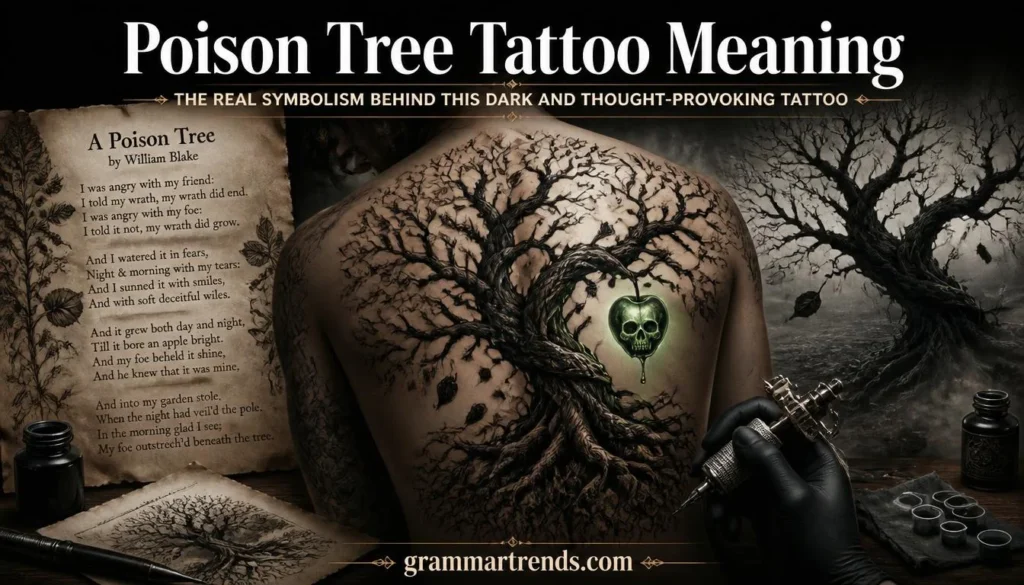
Understanding the Poison Tree Tattoo Meaning reveals hidden emotions, personal struggles, literary roots, and deep human connections through ink.
A poison tree tattoo is more than a dark and striking piece of modern body art; it is a symbol carrying psychological weight, emotion, and storytelling. When I explored this tattoo design, I found its deeply layered meaning connected with personal experiences, hidden struggles, and human nature.
Many people who wear this tattoo say they feel a strong connection because the design reflects their own journey. The meaning comes from its literary roots, especially William Blake and A Poison Tree, the 18th-century poem that explores suppressed emotions, anger, and how feelings can grow into something destructive when left unaddressed.
The literary depth and cultural symbolism of this tattoo continue to influence modern tattoo culture, where self-expression meets creativity. Artists transform layered ideas into custom designs featuring twisted branches, subtle hints of decay, and vibrant colors that mirror emotional complexity. Each piece becomes a conversation starter, a testament to the wearer’s journey, and a reflection of identity, memory, and raw honesty.
For anyone considering a poison tree tattoo design after they stumbled across one and kept thinking about why it pulls you in, exploring its layers helps uncover the deeper meaning. From placement choices and design styles to real-life interpretations, practical advice, and design choices that shape meaning, this guide explores every dimension instead of simply scratch the surface like many tattoo articles.
Quick Answer
A Poison Tree Tattoo usually symbolizes hidden emotions, suppressed anger, personal struggles, betrayal, and emotional growth. Inspired by William Blake’s poem “A Poison Tree,” this tattoo represents how buried feelings can grow over time and affect a person’s life. While its dark imagery may suggest pain or inner conflict, many people choose it as a symbol of healing, resilience, self-awareness, and transformation after difficult experiences. The true meaning depends on the wearer’s personal story, design elements, and life journey.
What Does a Poison Tree Tattoo Mean?
The poison tree tattoo meaning centers around emotions that grow silently beneath the surface. Most commonly, it symbolizes:
- Hidden anger
- Resentment
- Betrayal
- Emotional suppression
- Revenge
- Toxic relationships
- Pain transformed into wisdom
Unlike cheerful tree tattoos that represent life and peace, the poison tree carries a darker emotional current. It reflects the side of human nature people often hide.
Think of it like emotional corrosion. A person buries anger instead of expressing it. Over time, that anger grows roots. Eventually, it becomes poisonous.
That concept sits at the heart of this tattoo.
The Core Symbolism Behind the Poison Tree Tattoo
A poison tree usually represents emotional buildup. Instead of releasing pain in healthy ways, the emotion festers internally.
The symbolism often includes:
| Symbol | Meaning |
| Rotten roots | Hidden trauma |
| Poison fruit | Temptation or destructive behavior |
| Dead branches | Emotional exhaustion |
| Dark bark | Psychological struggle |
| Falling leaves | Loss or grief |
| Burning tree | Rebirth and release |
For many people, the tattoo becomes a reminder not to bottle up emotions. It’s less about glorifying darkness and more about acknowledging it honestly.
That distinction matters.
The Literary Origin of the Poison Tree Tattoo Meaning
Most poison tree tattoos trace back to William Blake’s poem A Poison Tree, published in 1794 as part of Songs of Experience.
The poem remains one of the most psychologically insightful works in English literature.
Summary of William Blake’s “A Poison Tree”
The poem describes two situations:
- The speaker openly addresses anger toward a friend
- The speaker hides anger toward an enemy
The hidden anger grows “day and night” until it becomes a poisonous tree bearing a deadly apple. Eventually, the enemy dies beneath the tree.
Here’s the famous opening:
“I was angry with my friend;
I told my wrath, my wrath did end.”
Then comes the darker turn:
“I was angry with my foe:
I told it not, my wrath did grow.”
Simple words. Brutal truth.
Blake understood something timeless about human psychology: suppressed emotions become dangerous.
Why the Poem Inspires Tattoos
Tattoo enthusiasts connect with Blake’s poem because it blends:
- Emotional realism
- Gothic imagery
- Symbolic storytelling
- Psychological depth
- Moral ambiguity
Unlike straightforward tattoo symbols, the poison tree invites interpretation. That complexity makes it compelling.
A skull tattoo says death.
A poison tree tattoo says emotional decay, hidden pain, temptation, revenge, and transformation all at once.
That layered symbolism gives the design unusual staying power.
Poison Tree Tattoo Symbolism Explained
The poison tree tattoo carries multiple meanings depending on the wearer’s life experiences.
Anger and Emotional Suppression
This remains the most common interpretation.
Many people suppress emotions to avoid conflict. Unfortunately, unresolved resentment doesn’t disappear. It grows quietly beneath the surface.
The poison tree symbolizes that process.
Instead of healing, emotional pain mutates into bitterness.
That idea resonates deeply with people who experienced:
- Betrayal
- Emotional abuse
- Toxic friendships
- Manipulation
- Family trauma
Growth Through Pain
Oddly enough, the poison tree can also symbolize growth.
Trees naturally represent development and endurance. Even a poisonous tree still grows.
That’s why some wearers interpret the tattoo as:
- Surviving hardship
- Learning from suffering
- Emotional evolution
- Self-awareness
- Transformation through adversity
Pain shaped them. The tattoo acknowledges that reality instead of pretending otherwise.
Temptation and Forbidden Desire
Many poison tree tattoos include apples or forbidden fruit imagery.
That symbolism connects to:
- Temptation
- Seduction
- Moral corruption
- Dangerous attraction
- Self-destructive behavior
The image mirrors ancient myths and biblical themes where beautiful things conceal danger.
A poisonous apple looks harmless until someone bites it.
That metaphor appears constantly in relationships, addictions, and emotional manipulation.
Death and Mortality
Dark tree imagery naturally connects with mortality.
Dead branches, ravens, skulls, and decaying roots often symbolize:
- Emotional death
- Loss of innocence
- Psychological darkness
- Acceptance of mortality
Yet the tattoo rarely feels hopeless.
Instead, it often reflects realism. Life includes darkness. The poison tree acknowledges that uncomfortable truth.
The Psychological Meaning Behind a Poison Tree Tattoo
Psychologically, this tattoo reveals fascinating emotional themes.
The Tattoo as a Reflection of Inner Conflict
Many people who choose poison tree tattoos describe living with emotional duality.
Externally, they appear calm.
Internally, they battle resentment, grief, anger, or trauma.
The tattoo externalizes those hidden emotions. In some ways, it acts like emotional archaeology. It exposes what has remained buried underground.
Carl Jung’s concept of the “shadow self” fits surprisingly well here. Jung believed humans suppress darker aspects of personality instead of confronting them directly.
The poison tree becomes a visual representation of that shadow.
Why People Gravitate Toward Dark Symbolic Tattoos
Dark tattoos often receive unfair judgment. People assume they signal negativity or aggression.
In reality, symbolic dark tattoos frequently represent:
- Emotional honesty
- Survival
- Self-reflection
- Acceptance of pain
- Psychological complexity
A poison tree tattoo doesn’t necessarily mean someone embraces darkness.
Sometimes it means they survived it.
Tattoos as Emotional Processing
Researchers studying tattoo psychology often note that tattoos help people reclaim ownership over painful experiences.
For example:
| Emotional Experience | Possible Tattoo Meaning |
| Betrayal | Reminder of lessons learned |
| Grief | Memorial symbolism |
| Trauma | Reclaiming control |
| Anger | Emotional acknowledgment |
| Depression | Survival and endurance |
The poison tree works especially well because it transforms abstract emotions into powerful visual symbolism.
Poison Tree Tattoo Meaning in Different Cultures
Tree symbolism exists across nearly every culture on Earth. Poison tree imagery adds darker interpretations to those traditional meanings.
Western Interpretations
In Western culture, poison tree tattoos often connect with:
- Gothic aesthetics
- Literature
- Psychological symbolism
- Revenge narratives
- Emotional repression
Modern alternative culture also helped popularize dark botanical imagery in tattoo art.
Eastern Symbolism of Trees and Poison
Eastern traditions frequently associate trees with balance, spirituality, and life energy.
A poisoned tree can symbolize:
- Spiritual corruption
- Emotional imbalance
- Loss of harmony
- Negative karma
Some interpretations also view poisonous growth as a warning against destructive thoughts.
Biblical and Religious Associations
Poison tree tattoos sometimes resemble imagery from the Garden of Eden.
Common themes include:
- Forbidden fruit
- Temptation
- Sin
- Desire
- Moral downfall
The poisonous apple motif especially reinforces biblical symbolism.
Modern Pop Culture Influence
Dark academia, gothic fashion, and alternative art communities helped revive interest in literary tattoos.
Today, poison tree tattoos appear frequently among people drawn to:
- Gothic aesthetics
- Symbol-heavy tattoos
- Philosophical themes
- Emotional storytelling
- Dark fantasy imagery
Popular Poison Tree Tattoo Designs and Their Meanings
Design choices dramatically change the tattoo’s interpretation.
Dead Poison Tree Tattoo
A dead poison tree often symbolizes:
- Emotional burnout
- Loss
- Depression
- Survival after devastation
The imagery feels bleak yet strangely powerful.
Like a tree surviving winter, it suggests endurance despite emotional destruction.
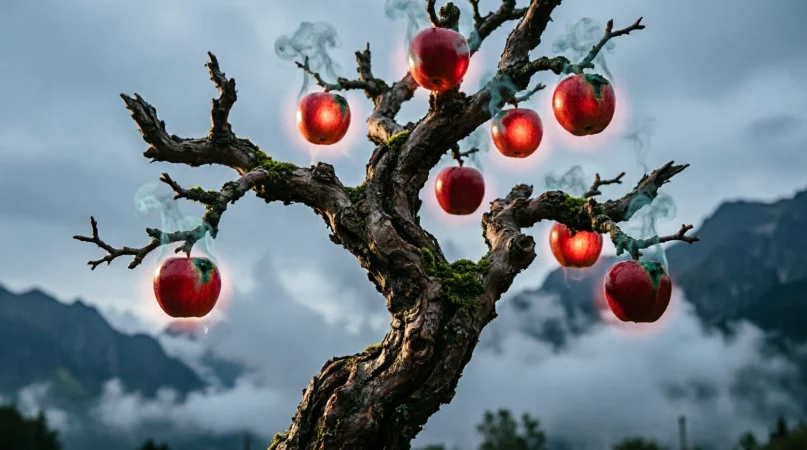
Poison Tree With Apples
This remains one of the most iconic designs.
The apple usually symbolizes:
- Temptation
- Seduction
- Hidden danger
- Manipulation
- Desire
Bright apples against dark branches create striking visual contrast.
Blackwork Poison Tree Tattoo
Blackwork designs use heavy shadows and solid ink saturation.
They often represent:
- Emotional intensity
- Mystery
- Inner darkness
- Psychological depth
These tattoos age well because bold black lines maintain clarity over time.
Poison Tree With Exposed Roots
Roots symbolize origins and hidden foundations.
Exposed roots may represent:
- Childhood trauma
- Family wounds
- Buried memories
- Psychological vulnerability
This design often feels intensely personal.
Poison Tree and Skull Tattoo
Adding a skull amplifies themes of mortality and destruction.
The combination may symbolize:
- Emotional death
- Revenge
- Acceptance of darkness
- Transformation through suffering
Done correctly, the design looks dramatic without becoming cliché.
Minimalist Poison Tree Tattoo
Minimalist versions use fine lines and sparse detail.
These tattoos often symbolize:
- Quiet suffering
- Private meaning
- Emotional subtlety
- Silent resilience
Not every dark tattoo needs aggressive imagery.
Sometimes restraint makes the symbolism stronger.
Best Tattoo Styles for a Poison Tree Tattoo
Style changes emotional tone completely.
Black and Grey Realism
This style creates intense atmosphere through shadows and texture.
Best for:
- Dramatic symbolism
- Detailed bark and roots
- Emotional realism
Gothic Poison Tree Tattoos
Gothic styles emphasize darkness and literary symbolism.
Features often include:
- Ravens
- Fog
- Moonlight
- Decaying branches
- Victorian aesthetics
Perfect for fans of dark academia or gothic art.
Fine Line Poison Tree Tattoos
Fine-line tattoos create elegance through subtle detail.
They work well for:
- Minimalist symbolism
- Smaller placements
- Delicate branch structures
Watercolor Poison Tree Tattoos
Watercolor effects add emotional chaos and dreamlike energy.
Popular colors include:
- Deep red
- Black washes
- Dark purple
- Smoky blue
These tattoos often symbolize emotional turbulence.
Neo-Traditional Poison Tree Tattoos
Neo-traditional styles combine bold outlines with symbolic imagery.
Common additions include:
- Snakes
- Apples
- Daggers
- Ravens
- Eyes
The result feels dramatic and visually rich.
Read more: What Does ICL Mean in Text? Full Meaning and Examples
Poison Tree Tattoo Placement Meaning
Placement affects symbolism more than most people realize.
Forearm Poison Tree Tattoo Meaning
Forearm tattoos remain highly visible.
They often symbolize:
- Open acknowledgment of pain
- Strength through struggle
- Emotional transparency
This placement also works well for vertical tree designs.
Chest Placement
Chest tattoos feel intimate and emotionally charged.
Common meanings include:
- Heartbreak
- Emotional burden
- Deep personal trauma
Because the tattoo sits near the heart, the symbolism becomes more personal.
Back Poison Tree Tattoos
Large back pieces allow complex storytelling.
They often represent:
- Carrying emotional weight
- Hidden struggles
- Personal history
Back tattoos also create space for sprawling roots and branches.
Hand and Wrist Tattoos
Smaller poison tree tattoos on the wrist or hand often symbolize:
- Constant self-reminder
- Emotional accountability
- Public acknowledgment of inner truth
These placements feel bold because they remain difficult to hide.
Leg and Thigh Tattoos
Leg placements usually feel more private.
Many people choose them for symbolism tied to:
- Personal journeys
- Emotional movement
- Quiet resilience
Poison Tree Tattoo Meaning for Men
Men often interpret poison tree tattoos through themes of emotional suppression and resilience.
Masculinity and Hidden Emotion
Many cultures discourage emotional vulnerability in men.
As a result, some men relate strongly to the poem’s message about buried anger.
The tattoo becomes symbolic of:
- Silent suffering
- Emotional isolation
- Internal conflict
- Stoicism
Strength Mixed With Darkness
Masculine poison tree designs frequently include:
- Skulls
- Ravens
- Wolves
- Heavy blackwork
- Sharp branches
These elements intensify the tattoo’s darker symbolism.
Common Design Themes for Men
| Design Element | Common Meaning |
| Ravens | Intelligence and secrecy |
| Roots | Trauma origins |
| Skulls | Mortality |
| Thorns | Emotional pain |
| Dead branches | Isolation |
Poison Tree Tattoo Meaning for Women
Women often interpret poison tree tattoos differently.
Emotional Survival and Transformation
For many women, the tattoo symbolizes:
- Recovery from betrayal
- Escaping toxic relationships
- Emotional resilience
- Reclaiming identity
The symbolism often feels empowering rather than destructive.
Feminine Interpretations of Dark Symbolism
Women frequently blend dark imagery with softer visual elements.
Popular combinations include:
- Poison apples
- Floral accents
- Crescent moons
- Butterflies
- Fine-line branches
That contrast creates a fascinating emotional tension between beauty and danger.
Popular Poison Tree Tattoo Ideas for Women
Some common concepts include:
- Half-dead half-blooming trees
- Black branches with red flowers
- Poison tree and moon tattoos
- Delicate root systems
- Minimalist shoulder tattoos
These designs often feel poetic rather than aggressive.
Poison Tree Tattoo Ideas With Deep Symbolism
Some concepts carry especially layered meanings.
Poison Tree and Raven Tattoo
Ravens symbolize:
- Intelligence
- Mystery
- Secrets
- Transformation
Together, the imagery feels haunting and cerebral.
Burning Poison Tree Tattoo
Fire changes the symbolism dramatically.
Instead of emotional corruption, the tattoo may represent:
- Release
- Purification
- Letting go
- Emotional rebirth
This design often appeals to people moving beyond painful experiences.
Half-Dead Half-Living Tree
One side flourishes while the other decays.
The symbolism reflects:
- Duality
- Healing versus pain
- Emotional conflict
- Survival through hardship
It’s one of the most visually powerful concepts in modern tattoo art.
Poison Tree With Clock Imagery
Clocks symbolize time, memory, and unresolved emotion.
Together, the design may represent:
- Lingering resentment
- Emotional scars over time
- Healing delays
- Regret
Does a Poison Tree Tattoo Have a Negative Meaning?
Not necessarily.
That’s one of the biggest misconceptions surrounding this tattoo.
Darkness Doesn’t Always Mean Negativity
Dark symbolism often explores emotional truth rather than evil.
A poison tree tattoo can represent:
- Self-awareness
- Survival
- Reflection
- Healing
- Emotional maturity
In fact, many people choose the design precisely because it acknowledges emotional complexity honestly.
Life isn’t always bright sunshine and inspirational quotes.
Sometimes growth comes through pain.
Meaning Depends on the Wearer
Tattoo symbolism always remains personal.
For one person, the poison tree represents revenge.
For another, it symbolizes overcoming trauma.
Someone else may connect purely with the literary roots.
That flexibility gives the design emotional depth many trend-based tattoos lack.
Poison Tree Tattoo Meaning vs Other Tree Tattoos
Tree tattoos carry wildly different symbolism depending on species and artistic style.
Here’s how the poison tree compares.
| Tattoo Type | Main Meaning | Emotional Tone |
| Poison Tree Tattoo | Resentment, hidden emotion, transformation | Dark and introspective |
| Tree of Life | Connection and spirituality | Hopeful |
| Dead Tree Tattoo | Endurance and loss | Somber |
| Cherry Blossom Tree | Impermanence and beauty | Gentle |
| Oak Tree Tattoo | Strength and wisdom | Grounded |
| Willow Tree Tattoo | Grief and healing | Reflective |
The poison tree stands apart because it focuses heavily on internal emotional struggle.
Things to Consider Before Getting a Poison Tree Tattoo
A meaningful tattoo deserves careful thought.
Understand the Emotional Weight
This isn’t just decorative ink.
People often ask about symbolic tattoos. Be prepared to explain the meaning or keep it private.
Choose the Right Artist
Not every artist excels at dark symbolic work.
Look for someone experienced in:
- Blackwork
- Gothic tattoos
- Detailed shading
- Botanical imagery
- Emotional composition
The mood matters as much as the technical execution.
Think Long-Term
Ask yourself:
- Will this symbolism still matter years from now?
- Does the design reflect temporary emotion or deeper identity?
- Will you appreciate the aesthetic long-term?
A thoughtful tattoo ages better emotionally and visually.
FAQs
What does a poison tree tattoo symbolize?
A poison tree tattoo usually symbolizes hidden emotions, personal struggles, growth, and the consequences of keeping feelings buried. It can represent both pain and the strength gained from overcoming difficult experiences.
Is a poison tree tattoo connected to William Blake?
Yes, many poison tree tattoos are inspired by William Blake’s poem “A Poison Tree.” The poem explores themes like anger, suppressed emotions, and how unresolved feelings can grow into something harmful.
Is a poison tree tattoo always a dark symbol?
No. Although the design often has a dark and mysterious appearance, it can also represent healing, resilience, self-awareness, and personal transformation. The meaning depends on the wearer’s own story.
What elements are commonly added to a poison tree tattoo design?
Common elements include twisted branches, roots, falling leaves, thorns, decay effects, and vibrant colors. These details help artists express emotions like struggle, change, balance, and renewal.
Where is the best placement for a poison tree tattoo?
The ideal placement depends on the size and style of the design. Popular areas include the arm, back, chest, shoulder, and forearm because they provide enough space for detailed branches and symbolic elements.
Why do people choose a poison tree tattoo?
People often choose this tattoo because it represents their personal journey, emotional experiences, or lessons learned from difficult moments. It can serve as a reminder of resilience, self-growth, and the power of overcoming challenges.
Conclusion
A poison tree tattoo is not just an artistic choice; it is a personal symbol that carries stories of emotions, growth, and inner battles. Its connection to William Blake’s A Poison Tree gives it a deeper meaning, reminding people how hidden feelings, pain, and unresolved emotions can shape their lives.
Whether you choose this design because of its dark beauty, literary connection, or personal journey, the poison tree tattoo meaning depends on the story you attach to it. Every branch, root, and detail can represent something different, turning a simple piece of ink into a powerful reflection of who you are and what you have overcome.

Mia Rose brings fifteen years of experience at The University of Edinburgh’s English Literature department, leading students through explorations of classic and contemporary texts, literary theory, and narrative design. Her academic interests center on Victorian and modernist fiction, poetic rhythms, postcolonial storytelling, and digital approaches to literary study—with a keen eye on how voice and perspective frame cultural dialogue. Mia has delivered talks at prestigious global conferences and authored articles in scholarly journals, showcasing her commitment to meaningful research and lively classroom engagement.