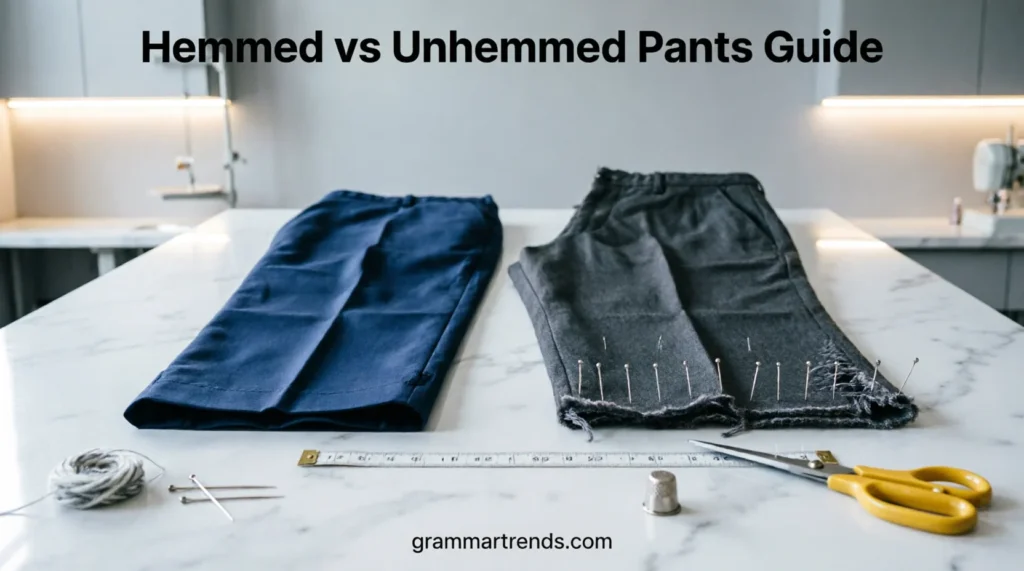
In Hemmed vs Unhemmed Pants, many people feel confused when deciding the best option. From my experience, understanding the differences helps you make an informed decision. Hemmed pants have neatly folded edges, are stitched and altered to match the wearer leg length, creating a clean, polished, and professional appearance.
Unhemmed pants keep raw edges and offer more flexibility for custom tailoring, styling, and future adjust length needs. Your comfort, occasion, inseam measurement, and desired appearance should guide the choice, whether for formal events, office outfits, casual wear, or a more relaxed vibe, while a finished hem improves durability, prevents fraying, and delivers a better overall fit.
What Does “Hemmed” Mean in Clothing?
A hemmed pair of pants has a finished edge sewn at the bottom of each pant leg. The fabric gets folded inward and stitched to prevent fraying while creating a clean, polished appearance.
In simple terms, hemmed pants are ready to wear immediately.
Most casual clothing sold in stores already comes hemmed because brands manufacture them in standard inseam lengths like:
- 30-inch inseam
- 32-inch inseam
- 34-inch inseam
- 36-inch inseam
You buy your size, try them on, and wear them without additional tailoring.
Why Hemming Matters
Pant length affects:
- Overall silhouette
- Visual proportions
- Professional appearance
- Comfort while walking
- Shoe visibility
- Fabric durability
Even expensive pants can look cheap if the hem length is wrong.
Example
Imagine wearing slim dress pants that bunch heavily around your ankles. Instead of looking sharp and modern, the fabric stacks awkwardly above your shoes. The entire outfit instantly loses structure.
Now compare that to properly hemmed trousers with a slight break. Clean lines. Balanced proportions. Better movement.
Small difference. Huge visual impact.
What Does “Unhemmed” Mean?
Unhemmed pants come with unfinished pant legs. The bottom edges remain open so the buyer can customize the exact length before wearing them.
You’ll often see unhemmed trousers in:
- Suit pants
- Luxury menswear
- Formal trousers
- High-end wool pants
- Custom tailoring shops
Instead of guessing your inseam, brands leave the finishing work to a tailor.
Why Brands Sell Unhemmed Pants
People have wildly different leg proportions. Two men with the same waist size may need completely different pant lengths.
For example:
| Waist Size | Person A Inseam | Person B Inseam |
| 34 | 30 inches | 34 inches |
If both bought pre-hemmed pants, one would likely need alterations anyway.
Unhemmed trousers solve that problem by allowing precise customization.
Hemmed vs Unhemmed Pants: Quick Comparison
| Feature | Hemmed Pants | Unhemmed Pants |
| Ready to wear | Yes | No |
| Tailoring required | Usually not | Yes |
| Best for convenience | Excellent | Poor |
| Best for precise fit | Limited | Excellent |
| Common in casualwear | Very common | Rare |
| Common in formalwear | Less common | Very common |
| Cost after tailoring | Lower | Higher |
| Professional appearance | Depends on fit | Usually sharper |
Why Pant Hemming Changes Your Entire Look
Many people obsess over jackets, watches, and shoes while ignoring pant length. That’s like polishing the hood of a car while driving on flat tires.
The hem controls the visual flow of your outfit.
Proper Hemming Creates Better Proportions
Correctly hemmed pants:
- Elongate the legs
- Create cleaner lines
- Improve posture visually
- Prevent fabric pooling
- Highlight footwear correctly
Meanwhile, overly long pants create visual clutter.
Fashion stylists often say:
“Your pants should frame your shoes, not swallow them.”
That single principle separates polished dressing from careless dressing.
Types of Pant Breaks Explained
The “break” refers to how much fabric rests on top of your shoe.
Different breaks create completely different aesthetics.
No Break Pants
No-break pants stop right above the shoe with almost zero fabric folding.
Best For
- Slim-fit trousers
- Modern tailoring
- Minimalist fashion
- Loafers and sneakers
Look
Clean. Sharp. Contemporary.
Downside
Too short can make pants look accidental instead of intentional.
Slight Break Pants
A slight break creates one small fold where the pant meets the shoe.
This is the sweet spot for most people.
Best For
- Business attire
- Modern office wear
- Dress trousers
- Everyday smart casual outfits
Why It Works
It balances comfort, elegance, and practicality without looking trendy or dated.
Medium Break Pants
Medium-break trousers create noticeable folds over the shoe.
Best For
- Traditional menswear
- Wider-cut trousers
- Conservative business settings
Look
Classic and formal.
However, too much bunching starts looking sloppy quickly.
Full Break Pants
Full-break pants create significant stacking over the shoe.
Best For
- Traditional tailoring
- Vintage-inspired suits
- Certain formal styles
Risk
Too much fabric can make you appear shorter and heavier.
That’s why modern tailoring usually avoids excessive breaks.
When You Should Choose Hemmed Pants
Hemmed pants work best for people who value simplicity and convenience.
Everyday Casual Wear
Most jeans, joggers, chinos, and casual pants already come hemmed because casualwear uses standard sizing.
You can grab them off the rack and leave the store wearing them.
Fast Purchases
Need pants quickly for work or travel?
Pre-hemmed pants save time because they don’t require tailoring appointments.
Budget Shopping
Tailoring costs add up.
Basic hemming may cost:
| Type of Alteration | Average Cost |
| Basic pant hem | $10–$25 |
| Invisible hem | $20–$40 |
| Original jean hem | $25–$50 |
If you buy multiple pairs, tailoring expenses climb fast.
Standard Body Proportions
People with average inseam measurements often fit standard hem lengths well enough without alterations.
When Unhemmed Pants Are the Better Choice
Unhemmed pants shine when fit truly matters.
Buying a Suit
Most quality suits come unhemmed for one reason:
Formalwear demands precision.
Even half an inch changes the entire appearance of dress trousers.
Tall or Short Individuals
Standard lengths rarely work perfectly for people outside average sizing ranges.
Unhemmed trousers allow accurate customization.
Hard-to-Fit Body Types
Athletic builds, longer legs, or shorter torsos often create sizing challenges.
Custom hemming solves many of those issues.
Professional Appearance
Well-tailored trousers instantly elevate business attire.
That’s why executives, lawyers, consultants, and stylists often prefer unfinished dress pants.
How Tailors Hem Pants Properly
Professional hemming involves more than simply cutting fabric.
A skilled tailor evaluates:
- Shoe height
- Pant width
- Fabric drape
- Desired break
- Occasion
- Walking movement
The Tailoring Process
Measuring Length
The tailor pins the pants while you wear shoes.
This step matters because loafers, boots, and sneakers all affect pant length differently.
Creating the Break
The tailor adjusts the fabric to create your preferred break style.
Final Stitching
After cutting excess fabric, the hem gets stitched permanently.
Higher-end trousers may use invisible stitching techniques for cleaner results.
Common Hem Styles Explained
Not all hems look the same.
Different styles create different aesthetics.
Plain Hem
The most common option.
Simple folded edge with stitching.
Best For
- Modern trousers
- Chinos
- Slim-fit pants
Cuffed Hem
The bottom fabric folds upward visibly.
Best For
- Traditional menswear
- Wool trousers
- Vintage tailoring
Interesting Fact
Cuffs add visual weight, which can balance taller individuals nicely.
Blind Hem
The stitching remains nearly invisible from the outside.
Best For
- Formal dress pants
- Luxury trousers
Raw Hem
The fabric edge stays intentionally unfinished.
Popular in fashion-forward denim styles.
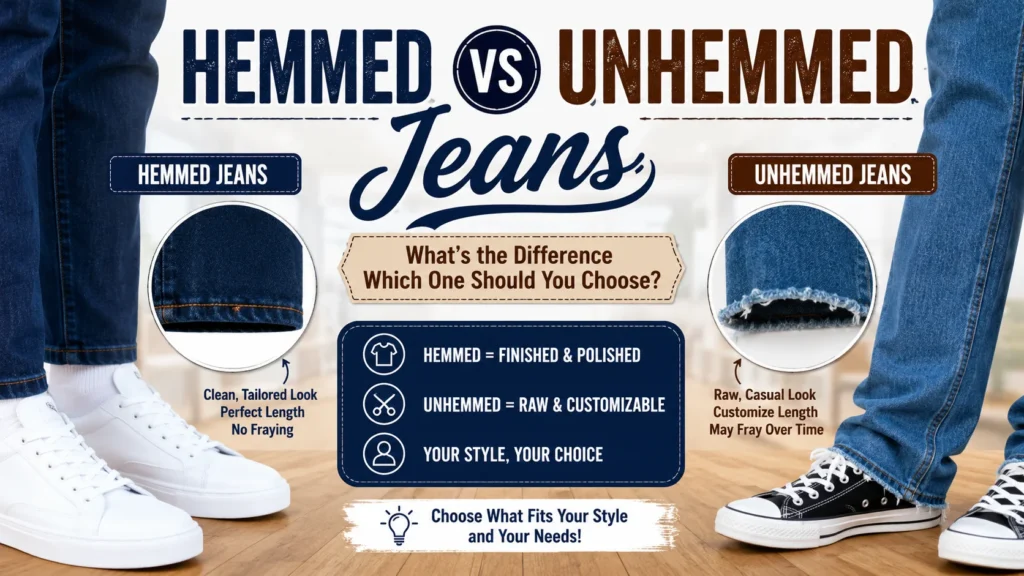
Hemmed vs Unhemmed Jeans
Jeans follow slightly different rules than dress trousers.
Raw Hems Became Fashionable
Distressed denim trends made unfinished hems intentionally stylish.
You’ll often see:
- Frayed edges
- Cropped cuts
- Asymmetrical hems
- Raw denim finishes
Unlike formal trousers, imperfect hems can actually enhance denim aesthetics.
Original Hem Preservation
When hemming expensive jeans, many people request “original hem preservation.”
This technique shortens the jeans while keeping the factory hem intact.
Why?
Because premium denim fades uniquely over time. Replacing the original hem can disrupt that natural aging pattern.
Biggest Mistakes People Make With Pant Length
Most hemming mistakes fall into predictable categories.
Pants Pooling Over Shoes
Excess fabric creates messy folds around the ankles.
This often happens when people buy longer pants “just in case.”
Result?
The outfit loses structure instantly.
Hemming Too Short
Overcorrecting creates another problem.
Pants that expose excessive ankle during movement can look awkward in formal settings.
Ignoring Shoe Type
Dress shoes and chunky sneakers create different visual heights.
Always hem pants while wearing the shoes you’ll actually use.
Forgetting Fabric Shrinkage
Cotton and denim often shrink slightly after washing.
Good tailors account for that.
How Different Fabrics Affect Hemming
Fabric changes how pants drape and move.
Wool Trousers
Wool drapes elegantly and works beautifully with slight or medium breaks.
Tailors often recommend conservative hemming because wool holds structure well.
Cotton Chinos
Cotton chinos wrinkle more easily, so overly long hems can bunch awkwardly.
Shorter breaks usually look cleaner.
Denim
Denim stacks naturally due to thicker fabric.
Slight stacking often works well with jeans.
Linen Pants
Linen wrinkles constantly by nature.
That relaxed texture pairs better with softer, slightly casual hems.
Stretch Fabrics
Stretch pants move differently while walking and sitting.
Tailors sometimes leave a little extra length to compensate.
Read more: “Nonresponsive vs Unresponsive” Difference and Correct Usage
Hemmed vs Unhemmed Pants for Men and Women
Tailoring expectations differ slightly across menswear and womenswear.
Men’s Tailoring
Men’s formalwear prioritizes:
- Proper break
- Shoe coverage
- Structured lines
- Consistent inseam proportions
Women’s Tailoring
Women’s fashion allows more flexibility because shoes vary dramatically in height.
For example:
| Shoe Type | Typical Pant Adjustment |
| Flats | Shorter hem |
| Heels | Longer hem |
| Boots | Depends on shaft height |
Wide-leg trousers often require entirely different hemming strategies than slim-fit pants.
Can You Hem Pants at Home?
Yes. But results vary wildly.
DIY Hemming Methods
Popular options include:
- Hand stitching
- Sewing machine hems
- Fabric tape
- Iron-on hemming strips
When DIY Works
Basic casual pants are usually manageable at home.
Especially:
- Pajama pants
- Simple cotton trousers
- Temporary adjustments
When DIY Goes Wrong
Formalwear is much less forgiving.
Crooked hems, uneven legs, or poor stitching become obvious immediately.
That’s why expensive trousers deserve professional tailoring.
Cost of Hemming Pants
Hemming remains one of the cheapest clothing alterations.
Average Tailoring Prices
| Hem Type | Average Price |
| Basic hem | $10–$25 |
| Blind hem | $20–$40 |
| Jean original hem | $25–$50 |
| Cuffed trouser hem | $20–$45 |
Large cities usually charge more due to higher labor costs.
How to Measure Your Ideal Pant Length at Home
You don’t always need a tailor for measurements.
What You Need
- Measuring tape
- Shoes
- Full-length mirror
- Straight pins
Basic Measurement Process
Put on the shoes you’ll wear most often
This step changes everything.
Stand naturally
Don’t force posture changes while measuring.
Pin the desired length
Aim for your preferred break style.
Measure the inseam
Measure from the crotch seam to the pinned hem.
Expert Styling Tips for Better-Looking Pants
Small adjustments create surprisingly large improvements.
Match Pant Width to Hem Style
Slim pants look best with minimal breaks.
Wider trousers handle fuller breaks better.
Avoid Extreme Stacking
Heavy stacking often makes outfits look dated unless intentionally styled.
Show Some Shoe
Great footwear deserves visibility.
A clean hem frames shoes properly instead of hiding them.
Tailoring Makes Cheap Clothes Look Better
A $60 pair of perfectly tailored pants often looks superior to $300 pants with poor fit.
That’s not fashion marketing hype. It’s visual proportion.
Real-World Example: Off-the-Rack vs Tailored
Imagine two people wearing identical navy trousers.
Person One
- Pants too long
- Heavy ankle bunching
- Fabric dragging slightly
Person Two
- Slight break
- Clean hem
- Proper drape
Most people will assume Person Two spent significantly more money.
Yet the only difference may be a $20 tailoring adjustment.
That’s the power of fit.
Hemmed vs Unhemmed Pants: Which Option Is Better?
The answer depends entirely on your priorities.
Choose Hemmed Pants If You Want:
- Convenience
- Lower cost
- Fast purchases
- Casual everyday wear
- Simple sizing
Choose Unhemmed Pants If You Want:
- Precise tailoring
- Better formalwear
- Cleaner fit
- Premium appearance
- Customized pant breaks
For most casual shoppers, hemmed pants work perfectly fine.
For suits, business attire, and premium trousers, unhemmed pants usually produce better results.
FAQs
What are hemmed pants?
Hemmed pants are pants that have been altered with a folded and stitched edge at the bottom. This creates a clean, polished, and professional appearance.
What are unhemmed pants?
Unhemmed pants have a raw edge and are not altered. They are often purchased this way so the length can be adjusted later through custom tailoring.
Are hemmed pants better than unhemmed pants?
Neither option is always better. Hemmed pants work well for formal events and office outfits, while unhemmed pants provide more flexibility for achieving a custom fit.
Do unhemmed pants unravel over time?
Yes, unhemmed pants with unfinished edges may unravel or show signs of wear over time if they are not properly finished.
Why is inseam measurement important?
Your inseam measurement helps determine the correct pant length. Knowing it makes it easier to choose between hemmed and unhemmed pants and achieve a better fit.
Can I buy unhemmed pants online?
Yes, many people prefer buying pants online in an unhemmed state because they can later visit a tailor for precise adjustments and exact specifications.
Do hemmed pants last longer?
In many cases, a finished hem improves durability and helps prevent fraying, making hemmed pants a practical long-term choice.
Conclusion
When comparing Hemmed vs Unhemmed Pants, the right choice depends on your comfort, preferred style, and the occasion. Hemmed pants offer a polished, professional look with improved durability, while unhemmed pants provide greater flexibility for tailoring and personalized fitting. Understanding these differences helps you select the option that best matches your needs and appearance goals.

Emma Rose has spent 15 years in the English Department at the University of California, Los Angeles (UCLA), guiding students through British and American literary classics, critical theory, and narrative techniques. Her scholarly focus includes 19th- and 20th-century fiction, the art of poetry, postcolonial writing, and digital humanities particularly how storytelling voice influences cultural perspectives. Emma has presented her research at major international conferences and published in respected academic journals, underscoring her dedication to both high-level scholarship and engaging teaching.