
11 Other Ways to Say “I’m Happy for You” helps you respond to good news with more warmth, kindness, and genuine joy.
When someone shares a personal milestone, promotion, engagement, dream, or small win, choosing the right phrase can make your response feel more meaningful and natural. Instead of relying on an overused expression, you can use heartfelt expressions such as Congratulations, I’m thrilled for you, or That’s wonderful news. These alternatives add excitement, appreciation, and encouragement while showing sincere support.
Whether you are speaking with a friend, family member, or colleague, the best choice depends on the situation, tone, and relationship. Using varied phrases also strengthens your communication skills, improves writing and speaking, and helps create a stronger connection. With a little practice, you can express happiness in a more authentic, positive, and impactful way that leaves a lasting impression.
Quick Answer
If you want a more natural or expressive way to say “I’m happy for you,” try “I’m thrilled for you,” “I’m delighted for you,” “That’s wonderful news,” “You deserve it,” or “I couldn’t be happier for you.”
The best choice depends on the situation. For a professional setting, “Congratulations!” or “I’m delighted for you” works well. With a close friend, “I’m so proud of you” or “I couldn’t be happier for you” sounds warmer and more personal. If someone shares reassuring news rather than an achievement, “I’m so glad to hear that” may fit better.
In short, don’t just swap one phrase for another. Choose an expression that matches the occasion, your relationship, and the emotion you want to convey.
What Does “I’m Happy for You” Mean?
The phrase “I’m happy for you” means that you feel pleased about another person’s good fortune, success, happiness, or positive situation.
The important word here is “for.”
When you say, “I’m happy,” you’re describing your own emotional state. When you say, “I’m happy for you,” you’re saying that your happiness comes from something good happening to another person.
Consider this example:
“I got the job!”
You could respond:
“I’m happy for you!”
You’re not saying that you got a job yourself. You’re expressing happiness because they received good news.
The phrase works in many situations, including:
- A friend getting a new job
- A family member graduating
- A coworker receiving a promotion
- Someone buying a house
- A friend getting engaged
- A person achieving a difficult goal
- Someone receiving long-awaited good news
- A loved one starting a new chapter
- Someone overcoming a difficult period
Because the phrase covers so many situations, it’s extremely versatile. However, its versatility can also make it feel a little ordinary when you want to communicate stronger emotion.
That’s where alternatives become useful.
11 Other Ways to Say “I’m Happy for You”
The best alternative depends on what happened and how close you are to the person. Some expressions sound highly enthusiastic. Others emphasize achievement, effort, affection, or future success.
Here’s a quick overview before looking at each expression in detail:
| Alternative | Emotional Strength | Best Context | Formality |
| I’m thrilled for you | High | Exciting personal news | Casual/Neutral |
| I’m delighted for you | Moderate-High | Personal or professional news | Neutral/Formal |
| That’s wonderful news! | High | Positive news | Neutral |
| Congratulations! | Moderate | Achievements and milestones | Neutral |
| You deserve it! | High | Earned success | Casual/Neutral |
| I’m so proud of you | Very High | Close relationships and achievements | Personal |
| I couldn’t be happier for you | Very High | Major life events | Neutral |
| That’s fantastic! | High | Casual good news | Casual |
| I’m so glad to hear that | Moderate | Positive developments | Neutral |
| It’s great to see you so happy | Moderate-High | Personal relationships | Casual |
| Wishing you all the best | Moderate | New beginnings | Neutral/Formal |
I’m Thrilled for You
“I’m thrilled for you” is one of the closest alternatives to “I’m happy for you” when you want to sound more enthusiastic.
The word “thrilled” communicates a stronger emotional reaction than “happy.” It suggests genuine excitement about the other person’s news.
For example:
“You got accepted into your first-choice college? I’m thrilled for you!”
That response sounds more energetic than:
“I’m happy for you.”
You can use it when a friend gets a dream job, a family member reaches an important milestone, or someone receives exciting personal news.
When to use “I’m thrilled for you”
This expression works especially well when:
- The news is genuinely exciting.
- You know the person reasonably well.
- You want your response to sound enthusiastic.
- The event represents something important to them.
Examples
- I’m thrilled for you! You worked so hard for this opportunity.
- I’m absolutely thrilled for you and your family.
- You finally got the apartment you wanted. I’m thrilled for you!
- I’m thrilled for you. This sounds like the perfect next step.
It usually feels warmer than a simple “Congratulations!” because it directly expresses your emotional response.
I’m Delighted for You
“I’m delighted for you” communicates happiness with a slightly more polished tone.
It works particularly well when you want to sound warm without becoming overly casual. That’s why it can fit both personal conversations and some professional settings.
For example:
“I’m delighted for you. Congratulations on your promotion.”
The phrase sounds sincere without being excessively emotional.
In everyday American English, “delighted” can sound a little more formal than “thrilled” or “so happy.” That difference isn’t necessarily a weakness. In the right situation, the polished tone is exactly what you want.
Examples
- I’m delighted for you and wish you continued success.
- I’m delighted for you. You really earned this opportunity.
- We’re delighted for you and your family.
- I’m delighted to hear the good news.
Best situations
Use “I’m delighted for you” when:
- You’re speaking to a coworker.
- You’re writing a professional message.
- You want to sound warm but polished.
- You’re congratulating someone on a meaningful achievement.
If you’re texting your closest friend, however, “I’m thrilled for you!” may sound more natural.
That’s Wonderful News!
Sometimes you don’t need to mention your own feelings directly.
“That’s wonderful news!” communicates enthusiasm while putting the spotlight on the person’s news.
This makes it extremely versatile.
Suppose your friend says:
“My surgery was successful, and I’m finally recovering.”
You could say:
“That’s wonderful news!”
Here, “Congratulations!” wouldn’t necessarily fit because the person isn’t celebrating an achievement. They’re sharing a positive development.
That’s an important distinction.
Examples
- That’s wonderful news! I’m really glad everything worked out.
- That’s wonderful news. You must be so relieved.
- That’s wonderful news! Your hard work paid off.
- That’s wonderful news. I’m excited to hear what happens next.
The phrase also works well in professional communication:
That’s wonderful news. Congratulations to the entire team.
It’s positive without sounding excessively familiar.

Congratulations!
“Congratulations!” is probably the most practical alternative when someone has accomplished something.
However, it isn’t a perfect synonym for “I’m happy for you.”
The distinction matters.
“I’m happy for you” emphasizes your happiness about the person’s situation.
“Congratulations!” recognizes an achievement, milestone, or favorable event.
For example:
“I graduated with honors!”
You can say:
“Congratulations!”
You can also say:
“I’m so happy for you!”
And you can combine them:
“Congratulations! I’m so happy for you.”
That combination sounds especially natural because one expression recognizes the achievement while the other communicates personal happiness.
Use “Congratulations!” for:
- Promotions
- Graduations
- Awards
- Engagements
- Weddings
- New jobs
- Major accomplishments
- Business milestones
- Completing difficult projects
Example
“Congratulations on the promotion! I’m genuinely happy for you. You worked incredibly hard for it.”
That sounds more personal than simply saying “Congratulations.”
You Deserve It!
“You deserve it!” does something different from “I’m happy for you.”
Instead of simply expressing happiness, it tells the person that their success is justified.
This phrase works particularly well when someone has worked hard for a result.
Imagine a coworker spends months preparing for a promotion and finally gets it.
“You got the promotion? You deserve it!”
The message isn’t merely “I’m pleased.” It’s also:
“I saw your effort, and I believe you earned this.”
That can make the response feel much more meaningful.
Examples
- You deserve it! Nobody worked harder than you did.
- That award is fantastic. You absolutely deserve it.
- You deserve this success after everything you’ve put into the project.
- A promotion? You deserve it! Congratulations.
A word of caution
Context matters.
In the right situation, “You deserve it!” sounds supportive. In the wrong situation, it can sound sarcastic.
For instance, if someone says:
“I finally got the vacation I wanted.”
“You deserve it!” sounds friendly.
But if the listener doesn’t know why the person deserved the outcome, the phrase can sometimes sound dismissive or patronizing.
When in doubt, add a reason:
“You deserve it. You’ve worked so hard for this.”
That removes much of the ambiguity.
I’m So Proud of You
“I’m so proud of you” expresses a deeper personal emotion than “I’m happy for you.”
The two phrases overlap, but they aren’t interchangeable in every situation.
When you say “I’m proud of you,” you’re usually expressing admiration for the person’s actions, growth, effort, courage, or achievement.
For example:
“You finished your degree while working full-time. I’m so proud of you.”
The statement recognizes more than the final result. It acknowledges what the person did to reach that point.
Best situations
This expression works especially well with:
- Children
- Parents
- Close friends
- Partners
- Siblings
- People whose journey you’ve followed closely
Examples
- I’m so proud of you. You never gave up.
- You made it through a difficult year, and I’m incredibly proud of you.
- I’m so proud of everything you’ve accomplished.
- Watching you reach this goal has been amazing. I’m so proud of you.
“Happy for you” vs. “Proud of you”
| Phrase | Main Focus |
| I’m happy for you | Happiness about someone’s good fortune |
| I’m proud of you | Admiration for someone’s actions or achievements |
You can use both together when the situation calls for strong emotion:
“I’m so proud of you, and I couldn’t be happier for you.”
I Couldn’t Be Happier for You
When ordinary happiness doesn’t seem strong enough, “I couldn’t be happier for you” raises the emotional intensity.
The phrase suggests that your happiness for the person is extremely strong.
It works particularly well for major life events:
- Getting married
- Having a child
- Achieving a lifelong goal
- Landing a dream job
- Recovering from a major setback
- Reaching an important personal milestone
Examples
- You finally got your dream job. I couldn’t be happier for you!
- I couldn’t be happier for you both.
- After everything you’ve been through, I couldn’t be happier for you.
- You deserve this moment. I couldn’t be happier for you.
Because this phrase is emotionally strong, don’t feel obligated to use it for every small piece of good news.
If someone tells you they bought a new coffee mug, “I couldn’t be happier for you” might sound comically dramatic.
Tone matching matters here.
That’s Fantastic!
Short, energetic, and conversational, “That’s fantastic!” is a natural way to respond to good news.
It works especially well in everyday speech and text messages.
Unlike “I’m happy for you,” this expression doesn’t explicitly state that you’re happy on the other person’s behalf. Instead, your enthusiastic reaction makes that meaning clear from context.
Examples
“I got the job!”
“That’s fantastic!”
“We bought our first house!”
“That’s fantastic! Congratulations!”
“My application was approved.”
“That’s fantastic news!”
The phrase feels natural because people often react emotionally before constructing a longer response.
Best use
Choose “That’s fantastic!” when you want to sound:
- Friendly
- Energetic
- Casual
- Spontaneous
- Encouraging
For formal emails, however, “Congratulations” or “That’s wonderful news” may be more appropriate.
I’m So Glad to Hear That
“I’m so glad to hear that” is especially useful when someone shares positive news rather than an achievement.
It communicates relief, happiness, or emotional support.
For example:
“The doctors said everything looks good.”
A natural response would be:
“I’m so glad to hear that.”
You wouldn’t necessarily say “Congratulations!” because the person hasn’t achieved a conventional milestone.
This distinction makes the phrase valuable in everyday conversations.
Examples
- I’m so glad to hear that everything worked out.
- I’m really glad to hear you’re doing better.
- I’m so glad to hear the good news.
- That’s wonderful. I’m so glad to hear that.
It also works well when you want to acknowledge someone’s feelings without sounding overly dramatic.
It’s Great to See You So Happy
Sometimes the best way to express happiness for someone is to focus on their happiness.
That is exactly what “It’s great to see you so happy” does.
The phrase sounds especially natural between people who know each other well.
Imagine a friend who has spent years looking for the right career and finally finds a job they love.
You could say:
“It’s great to see you so happy.”
That response carries a quiet warmth. You’re not merely congratulating the achievement. You’re saying that their happiness matters to you.
Examples
- It’s great to see you so happy. You really deserve this.
- Seeing you this excited makes me happy too.
- It’s wonderful to see you so happy after everything you’ve experienced.
- You look genuinely happy. It’s great to see.
This expression is more personal than a standard congratulatory phrase, so it works best when there’s an established relationship.
Wishing You All the Best
“Wishing you all the best” doesn’t directly mean “I’m happy for you.” Instead, it offers support and positive wishes for what comes next.
That makes it particularly useful for new beginnings.
You can use it when someone:
- Starts a new job
- Moves to another city
- Gets married
- Begins college
- Launches a business
- Starts a new chapter
- Retires
- Moves into a new home
Examples
- Congratulations on the new position. Wishing you all the best!
- It sounds like an exciting new chapter. Wishing you all the best.
- I’m so happy for you. Wishing you both all the best.
- Congratulations on your new adventure. Wishing you continued success.
This phrase is particularly useful when you want to sound warm, respectful, and forward-looking.
Quick Comparison of These Alternatives
Choosing the right expression becomes easier when you compare their emotional purpose.
| Expression | What It Communicates | Best For |
| I’m thrilled for you | Strong excitement | Exciting personal news |
| I’m delighted for you | Warm happiness | Professional or polished settings |
| That’s wonderful news! | Enthusiasm about news | Positive developments |
| Congratulations! | Recognition | Achievements and milestones |
| You deserve it! | Recognition of merit | Earned success |
| I’m so proud of you | Admiration and affection | Close relationships |
| I couldn’t be happier for you | Very strong happiness | Major life events |
| That’s fantastic! | Energetic enthusiasm | Casual conversations |
| I’m so glad to hear that | Happiness or relief | Good developments |
| It’s great to see you so happy | Personal warmth | Friends and family |
| Wishing you all the best | Support for the future | New beginnings |
How to Choose the Right Alternative
The best phrase isn’t always the most enthusiastic one.
Instead, think about three things: the event, your relationship, and the setting.
For a Friend
With a close friend, natural and expressive language usually works best.
Try:
- I’m thrilled for you!
- That’s fantastic!
- I couldn’t be happier for you.
- You deserve it!
- It’s great to see you so happy.
For example:
“You finally got the promotion? I’m thrilled for you! You worked so hard for it.”
That sounds more genuine than dropping a generic “Congratulations” and moving on.
For a Coworker
Professional relationships usually call for warmth without excessive intimacy.
Good options include:
- Congratulations!
- That’s wonderful news.
- I’m delighted for you.
- Wishing you all the best.
- You deserve it.
A professional response might be:
“Congratulations on your promotion. I’m delighted for you, and I wish you continued success in your new role.”
The wording remains positive while respecting the workplace relationship.
For a Family Member
Family conversations often allow more emotional language.
You might say:
- I’m so proud of you.
- I couldn’t be happier for you.
- You deserve this.
- It’s wonderful to see you so happy.
For a sibling who has reached a major goal:
“I’m so proud of you. I know how much work you put into this, and I couldn’t be happier for you.”
That’s considerably more personal than a simple “Congratulations.”
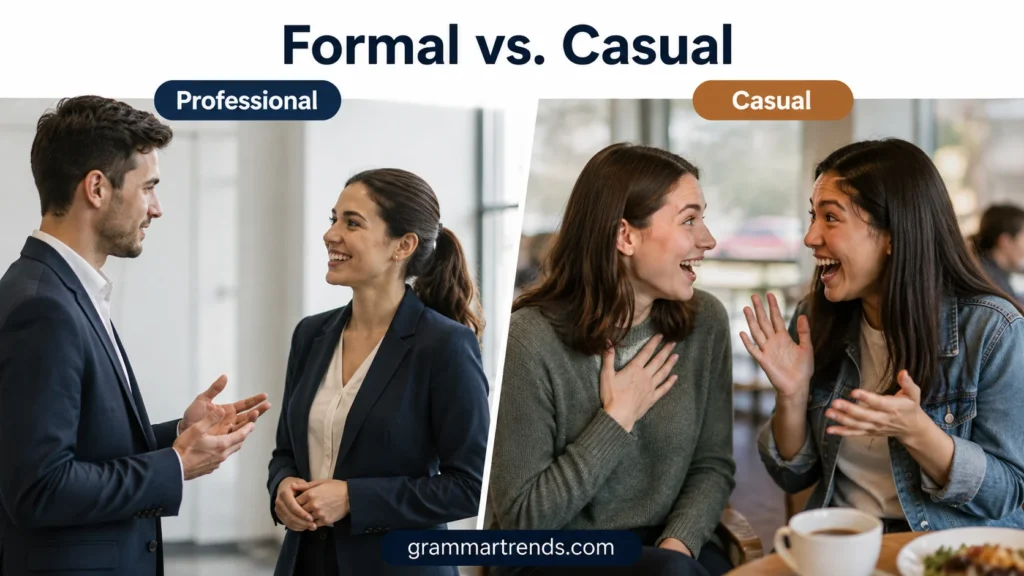
Formal vs. Casual Ways to Say “I’m Happy for You”
Context changes everything.
The same words can sound natural in one situation and awkward in another. A phrase that works beautifully in a text to your best friend may feel strange in a business email.
More Professional Alternatives
For professional communication, consider:
- Congratulations!
- That’s wonderful news.
- I’m delighted for you.
- Wishing you all the best.
- I wish you continued success.
More Casual Alternatives
For friends and informal conversations:
- I’m thrilled for you!
- That’s fantastic!
- You deserve it!
- I couldn’t be happier for you!
- I’m so glad to hear that!
A useful rule
Match the emotional volume of your response to the importance of the news.
A small success doesn’t always need a grand emotional declaration.
A major life event may deserve something more heartfelt.
“I’m Happy for You” vs. “I’m Proud of You”
These phrases often appear together, but they express different ideas.
“I’m happy for you” means you’re pleased because something good happened to the other person.
“I’m proud of you” means you admire something about what the person has done, overcome, or achieved.
Consider this example:
“I finally passed my certification exam.”
You could say:
“I’m happy for you!”
You’re celebrating their success.
You could also say:
“I’m proud of you!”
Now you’re emphasizing their effort and achievement.
A more emotionally complete response could be:
“I’m so proud of you. I know how hard you worked, and I’m incredibly happy for you.”
That distinction is small but important.
How to Make “I’m Happy for You” Sound More Genuine
You don’t always need a completely different phrase.
Sometimes, the best way to sound sincere is to add a specific detail.
Compare these two responses:
“I’m happy for you.”
and:
“I’m so happy for you. You’ve been working toward this for months.”
The second one feels more personal because it shows that you understand the person’s journey.
Mention What They Achieved
“I’m so happy for you. Getting that position was clearly your goal.”
Recognize Their Effort
“I’m thrilled for you. All those late nights finally paid off.”
Connect With Their Feelings
“That’s wonderful news. You must be incredibly excited.”
Add a Personal Wish
“Congratulations! I’m so happy for you, and I hope this next chapter is everything you want it to be.”
Specificity turns a routine response into something memorable.
Common Mistakes When Expressing Happiness for Someone
Even a positive phrase can miss the mark if you use it without considering context.
Using “Good for You” Automatically
“Good for you!” can sound encouraging.
However, depending on tone and context, it can also sound sarcastic or dismissive.
Compare:
“You finished your marathon? Good for you!”
With a warm voice, this can sound supportive.
But written without context, it may be interpreted differently.
For important situations, “I’m really happy for you” is usually safer.
Using “Congratulations” for Every Situation
Not every positive event represents an achievement.
If someone tells you:
“My test results came back normal.”
“Congratulations!” may sound inappropriate.
Instead, say:
“I’m so glad to hear that.”
The difference comes down to the nature of the news.
Saying “I’m Proud of You” Too Freely
“I’m proud of you” carries emotional weight.
It can be beautiful when coming from a close friend, parent, partner, or mentor. In a distant professional relationship, though, it may sound overly personal.
For a coworker, “Congratulations on the achievement” is often more appropriate.
Overdoing the Enthusiasm
Not every success requires:
“I COULDN’T BE HAPPIER FOR YOU!!!”
If someone tells you they found a slightly cheaper hotel for their weekend trip, a simple:
“That’s great!”
may be more natural.
Good communication isn’t about using the biggest phrase available. It’s about using the right phrase for the moment.
Making the Conversation About Yourself
When someone shares good news, keep the focus on them.
Instead of:
“That’s great. I remember when I got promoted too…”
Try:
“That’s fantastic! How are you feeling about the new role?”
The second response invites the person to continue sharing.

Real-Life Examples of What to Say Instead of “I’m Happy for You”
When Someone Gets a New Job
Casual:
“That’s fantastic! I’m thrilled for you.”
Professional:
“Congratulations on the new position. Wishing you every success in your new role.”
When Someone Gets Promoted
“Congratulations! You deserve it after all the work you’ve put in.”
Or:
“I’m delighted for you. This is a well-earned achievement.”
When Someone Graduates
“I’m so proud of you. You worked incredibly hard to get here.”
Another option:
“Congratulations! I couldn’t be happier for you.”
When Someone Gets Engaged
“That’s wonderful news! I’m so happy for you both.”
Or:
“I couldn’t be happier for you two. Congratulations!”
When Someone Buys a Home
“That’s fantastic! You’ve worked so hard for this. Congratulations!”
When Someone Achieves a Personal Goal
“You did it! You absolutely deserve this.”
Or:
“I’m so proud of you. I knew you could do it.”
When Someone Receives Long-Awaited Good News
“I’m so glad to hear that. You must be incredibly relieved.”
This response works because it recognizes the emotional context rather than forcing a generic congratulatory phrase into the conversation.
Read more: 10 Synonyms for “I Would Like to Ask” in a Formal Email
Short Alternatives for Text Messages and Social Media
Text messages usually favor short, energetic expressions.
Here are some natural choices:
- So happy for you!
- That’s amazing!
- That’s fantastic!
- Congratulations!
- So thrilled for you!
- What wonderful news!
- Couldn’t be happier for you!
- You deserve this!
- So glad to hear it!
- Well deserved!
Which ones feel the most natural?
| Text | Tone |
| So happy for you! | Warm |
| That’s amazing! | Enthusiastic |
| Congratulations! | Celebratory |
| You deserve this! | Encouraging |
| Couldn’t be happier for you! | Heartfelt |
| Well deserved! | Supportive |
| So glad to hear it! | Warm and conversational |
For social media, you can also make the response more personal:
“So happy for you! You’ve worked incredibly hard for this moment.”
That sounds more genuine than a string of generic celebratory words.
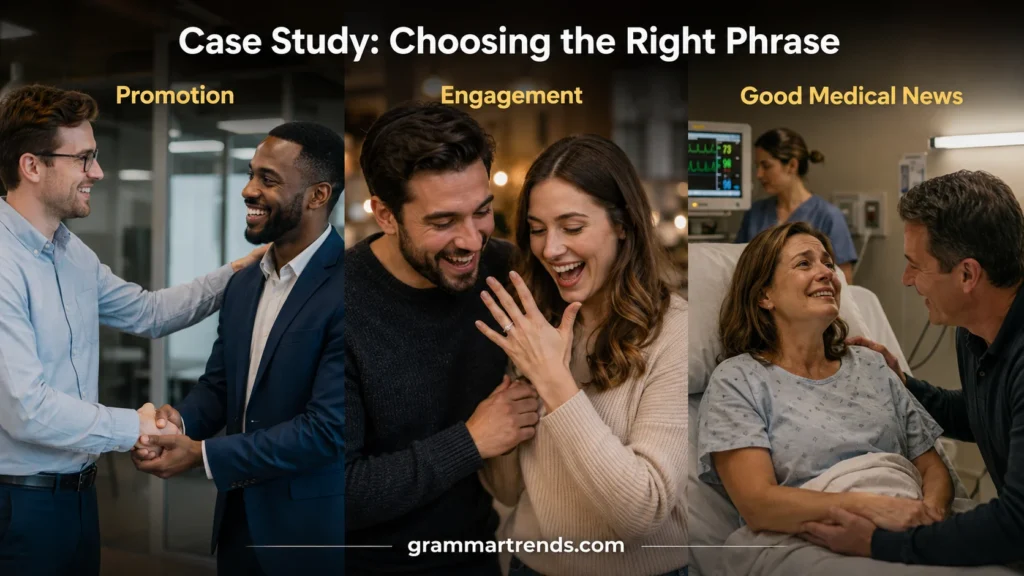
Case Study: Choosing the Right Phrase
Imagine three people receive good news on the same day.
Situation One: A Coworker Gets Promoted
A coworker announces:
“I just found out that I’ve been promoted to department manager.”
The best response might be:
“Congratulations! You deserve it.”
Why?
The promotion represents an achievement. “Congratulations” recognizes the milestone, while “You deserve it” acknowledges the person’s effort.
Situation Two: A Friend Gets Engaged
Your close friend says:
“We got engaged last night!”
A warmer response fits better:
“I couldn’t be happier for you both! Congratulations!”
The emotional intensity matches the significance of the news and the closeness of the relationship.
Situation Three: A Friend Receives Good Medical News
A friend says:
“The results came back, and everything looks good.”
Here, “Congratulations!” would sound strange.
A better response is:
“I’m so glad to hear that. You must be incredibly relieved.”
The response matches the nature of the news.
The lesson is simple: don’t choose an alternative based only on vocabulary. Choose it based on meaning and context.
Which Alternative Is Best for Different Situations?
If you want a quick decision guide, use this:
| If the Person… | Try Saying… |
| Got a promotion | Congratulations! You deserve it. |
| Got a dream job | I’m thrilled for you! |
| Graduated | I’m so proud of you. |
| Got engaged | I couldn’t be happier for you! |
| Shared positive news | That’s wonderful news! |
| Received reassuring news | I’m so glad to hear that. |
| Started a new chapter | Wishing you all the best. |
| Achieved a difficult goal | You deserve it! |
| Shared exciting casual news | That’s fantastic! |
| Is clearly very happy | It’s great to see you so happy. |
| Shared important professional news | I’m delighted for you. |
My Personal Experience as an English Specialist
As an English specialist, I’ve learned that “I’m happy for you” is useful, but choosing the right alternative can make your response feel more natural and sincere. I’ve noticed that expressions like “I’m thrilled for you,” “You deserve it,” and “I’m so proud of you” can better match different situations.
In my experience, the best communication isn’t about using difficult words. It’s about understanding the context, relationship, and emotion behind the conversation. Adding a personal detail, such as “You worked so hard for this,” can also make your response feel more genuine and meaningful.
FAQs
1. Why should I use alternatives to “I’m happy for you”?
Using different expressions keeps your conversations fresh and sincere. It also helps you match your words to the situation and the person’s achievement.
2. What is a professional alternative to “I’m happy for you”?
In workplace settings, phrases like “Congratulations on your success” or “I’m delighted to hear about your achievement” sound polished and professional.
3. Can I use these phrases in text messages?
Yes. Most alternatives work well in texts, emails, and social media messages. Choose a phrase that matches the tone of your relationship.
4. Which expression sounds the most heartfelt?
“I couldn’t be prouder of you” is often one of the most heartfelt options because it shows personal admiration and emotional support.
5. How can I make my congratulations sound more genuine?
Add a personal detail about the achievement. Mentioning the person’s effort or journey makes your message feel more authentic and meaningful.
6. Are these alternatives suitable for friends and family?
Absolutely. Many of these expressions, such as “I’m thrilled for you” and “You deserve all the happiness in the world,” work especially well with close friends and family members.
Conclusion
Finding better ways to express happiness for another person can make your conversations feel more genuine and memorable. While “I’m Happy for You” is always a kind response, using different phrases helps you match the moment, the relationship, and the level of excitement you want to share. Whether you choose a simple congratulations, a heartfelt compliment, or an enthusiastic expression of joy, the goal is to show sincere support.
I’ve noticed that people often appreciate thoughtful words more than we expect. A small change in wording can make a message feel warmer, more personal, and more meaningful. By learning these alternatives, you can improve your communication skills, expand your vocabulary, and respond with greater confidence. The best phrase is the one that feels natural and reflects your genuine happiness for someone else’s success, achievement, or special moment.

Emma Brooke brings 15 years of experience in the Department of English Language and Literature at the University of California, Berkeley, where she has taught and mentored students across courses in British and American literary traditions, critical theory, and narrative form. Her expertise spans 19th- and 20th-century fiction, poetic prosody, postcolonial literatures, and digital humanities, with a focus on how narrative voice shapes cultural meaning. Emma’s work has been presented at international conferences and published in peer-reviewed venues, reflecting her deep commitment to rigorous literary scholarship and accessible teaching.