
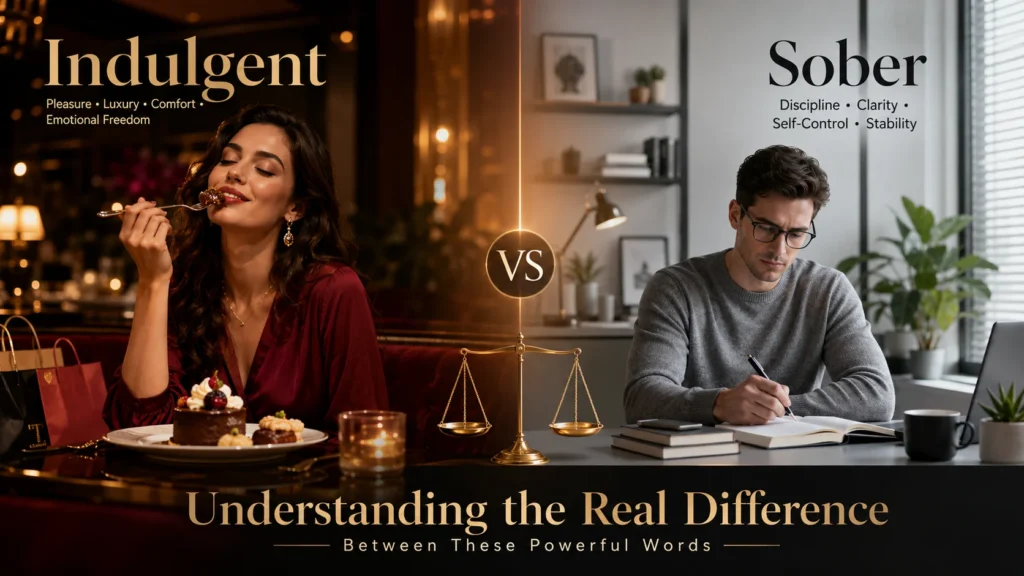
Indulgent vs Sober describes two contrasting approaches to life, decision-making, and personal behavior. While an indulgent person often embraces pleasure, spontaneity, and emotional expression, a sober person tends to value discipline, self-control, practicality, and thoughtful choices.
Understanding these differences can help you communicate more clearly and better interpret personality traits, behaviors, and lifestyle preferences.
Many people encounter the terms indulgent and sober in psychology, self-improvement, personality discussions, workplace communication, and everyday conversations.
Although they appear straightforward, their meanings extend beyond simple definitions. They reflect different attitudes toward emotions, responsibility, enjoyment, and long-term decision-making.
An indulgent lifestyle often emphasizes freedom, enjoyment, and living in the moment, whereas a sober mindset focuses on moderation, stability, careful planning, and personal accountability. Neither approach is inherently right or wrong, as each offers unique strengths depending on the situation, individual goals, and values.
Knowing when and how to use these terms also improves writing and communication. Whether you’re comparing personalities, discussing behavior, or choosing the most accurate word in a conversation, understanding the distinction between indulgent and sober helps you express ideas with greater clarity and confidence.
This guide explains the meaning of Indulgent vs Sober, highlights their key differences, provides practical examples, and explores when each term is most appropriate in real-life situations.
Why People Confuse?
The confusion usually starts because both words describe behavior, emotion, style, and atmosphere. They often appear in similar industries too.
You’ll see them in:
- Food writing
- Fashion magazines
- Interior design
- Lifestyle blogs
- Psychology discussions
- Brand marketing
- Recovery communities
Yet the emotional energy behind each word moves in opposite directions.
| Word | Emotional Direction |
| Indulgent | Pleasure, richness, excess |
| Sober | Restraint, seriousness, control |
An indulgent experience invites you to relax your limits. A sober experience asks you to maintain them.
That contrast becomes clearer in everyday language.
- “She enjoyed an indulgent spa weekend.”
- “The office used a sober color palette.”
Both sentences sound natural. Yet they create completely different moods.
Another reason people confuse these terms is that sober has more than one meaning. It can describe someone who avoids alcohol. It can also describe tone, fashion, behavior, or personality.
Meanwhile, indulgent can sound either positive or negative depending on context.
For example:
- “An indulgent chocolate cake” sounds delightful.
- “Indulgent parenting” may sound irresponsible.
That emotional flexibility makes these words fascinating. It also makes them easy to misuse.
What Does “Indulgent” Mean?
The word indulgent describes behavior or experiences connected to pleasure, comfort, luxury, or leniency.
At its core, indulgence means allowing yourself — or someone else — extra freedom or enjoyment.
“According to Dr. Jane Smith, a behavioral psychologist, ‘Indulgent personalities often score higher on openness, but lower on conscientiousness.'”
Clear Definition of Indulgent
An indulgent person or thing often involves:
- Pleasure
- Comfort
- Richness
- Generosity
- Excess
- Relaxed discipline
The word comes from the Latin indulgere, meaning “to yield” or “to be kind.”
Today, English speakers use indulgent in both positive and critical ways.
Positive Use
- Indulgent vacation
- Indulgent dessert
- Indulgent skincare routine
Negative Use
- Indulgent spending
- Indulgent behavior
- Overly indulgent parenting
The difference depends on moderation.
A little indulgence feels rewarding. Too much can feel reckless.
Common Situations Where “Indulgent” Is Used
Food and Dining
Food writers love this word because it instantly signals richness.
Examples include:
- Indulgent brownies
- Indulgent pasta dishes
- Indulgent milkshakes
The word tells readers to expect:
- High flavor
- Rich texture
- Comfort
- Decadence
A salad rarely gets called indulgent. A triple-layer chocolate cake almost always does.
Parenting
An indulgent parent allows children more freedom than usual.
This can include:
- Fewer rules
- Excessive rewards
- Limited discipline
Psychologists sometimes use the term permissive parenting as a close relative.
Example:
“The child struggled with boundaries because his parents were overly indulgent.”
Luxury and Travel
High-end brands frequently use indulgent in marketing because the word creates emotional appeal.
Hotels describe:
- Plush bedding
- Spa experiences
- Gourmet dining
- Private retreats
Example:
“The resort offered an indulgent escape from city life.”
Entertainment and Leisure
People also use indulgent to describe:
- Binge-watching shows
- Long shopping sprees
- Expensive hobbies
- Relaxing weekends
The word suggests temporary surrender to pleasure.
Synonyms of Indulgent
Here are several close alternatives:
| Synonym | Tone |
| Decadent | Luxurious and excessive |
| Pampering | Caring and comforting |
| Self-indulgent | Excessively self-focused |
| Luxurious | Expensive and refined |
| Lenient | Soft or forgiving |
Each carries slightly different emotional weight.
For example, decadent feels richer and more dramatic than indulgent. Meanwhile, pampering feels gentler and nurturing.
When “Indulgent” Sounds Negative
This matters more than many writers realize.
Indulgent becomes negative when it suggests:
- Lack of discipline
- Irresponsibility
- Excessive consumption
- Weak boundaries
Consider these examples:
| Sentence | Tone |
| “She enjoyed an indulgent dinner.” | Positive |
| “He lived an indulgent lifestyle.” | Potentially negative |
| “The company became indulgent with spending.” | Critical |
Context changes everything.
That’s why professional writers pay close attention to surrounding words and emotional tone.
What Does “Sober” Mean?
The word sober centers on restraint, seriousness, clarity, and moderation.
Unlike indulgent, sober removes emotional excess rather than inviting it.
Clear Definition of Sober
Most people first learn sober in relation to alcohol.
Example:
“He has been sober for five years.”
That remains the most common modern usage.
However, sober also describes:
- Serious attitudes
- Calm thinking
- Muted colors
- Minimalist aesthetics
- Controlled emotions
At its heart, sober means free from exaggeration or excess.
Different Ways “Sober” Is Used
Alcohol-Free Lifestyle
This remains the dominant usage today.
A sober person:
- Avoids alcohol
- Avoids intoxicating substances
- Maintains sobriety
The phrase appears often in:
- Recovery communities
- Healthcare discussions
- Mental health conversations
Serious Conversations
Writers often use sober to describe emotional tone.
Examples:
- A sober warning
- A sober discussion
- A sober reflection
In these cases, sober means thoughtful and serious rather than emotional or playful.
Fashion and Design
Minimalist aesthetics frequently use sober styling.
Think:
- Neutral colors
- Clean lines
- Simple tailoring
- Understated elegance
Example:
“The brand adopted a sober black-and-gray visual identity.”
Decision-Making
Sober thinking means clear thinking.
Examples include:
- Rational judgment
- Emotional restraint
- Calm evaluation
This usage appears often in journalism and business writing.
Synonyms of Sober
| Synonym | Meaning |
| Restrained | Controlled and moderate |
| Serious | Thoughtful and formal |
| Temperate | Moderate and disciplined |
| Plain | Simple and unadorned |
| Thoughtful | Calm and reflective |
Not all synonyms fit every situation.
For example, plain works for design while temperate fits behavior better.
Why “Sober” Doesn’t Always Mean “Sad”
Many people incorrectly associate sober with negativity.
That’s not always accurate.
A sober tone can feel:
- Elegant
- Professional
- Mature
- Calm
- Sophisticated
Luxury brands often use sober aesthetics to communicate refinement.
For example:
- Apple packaging
- Minimalist architecture
- Scandinavian interiors
None feel depressing. They feel controlled and intentional.
That distinction matters.
The Key Differences Explained
Now let’s compare the two directly.
Difference in Lifestyle Contexts
Lifestyle branding often separates these concepts clearly.
Indulgent Lifestyle
Usually includes:
- Luxury spending
- Rich foods
- Emotional freedom
- Relaxation
- Celebration
Sober Lifestyle
Usually includes:
- Moderation
- Self-control
- Simplicity
- Wellness
- Clear thinking
Neither lifestyle is automatically better.
Many modern people blend both.
For example:
- Sober weekdays
- Indulgent vacations
- Restrained fashion with indulgent dining
Human behavior rarely fits extremes.
Difference in Writing and Communication
Professional writers choose these words carefully because tone shapes perception.
Indulgent Writing Style
Common in:
- Food blogs
- Travel magazines
- Luxury branding
Characteristics:
- Emotional language
- Sensory detail
- Rich descriptions
Sober Writing Style
Common in:
- News reporting
- Academic work
- Corporate communication
Characteristics:
- Clear structure
- Limited exaggeration
- Neutral tone
Difference in Visual Aesthetics
Visual industries use these terms constantly.
Indulgent Design
Features:
- Velvet textures
- Rich colors
- Ornate detail
- Layered decoration
Sober Design
Features:
- Neutral palettes
- Sharp lines
- Minimal clutter
- Functional elegance
How To Use “Indulgent” Correctly in a Sentence
Correct usage depends heavily on context.
Everyday Sentence Examples
- “We ordered an indulgent chocolate lava cake.”
- “Her indulgent grandparents spoiled the kids.”
- “The hotel offered indulgent spa treatments.”
Notice the emotional warmth in each example.
Formal Sentence Examples
- “The campaign promoted an indulgent consumer lifestyle.”
- “Critics described the film as visually indulgent.”
- “The company faced backlash for indulgent executive spending.”
Formal usage often shifts toward criticism.
Common Sentence Patterns
Here are some natural combinations:
| Phrase | Common Meaning |
| Indulgent dessert | Rich and luxurious food |
| Indulgent lifestyle | Excessive comfort or spending |
| Indulgent parent | Too lenient |
| Self-indulgent behavior | Excessively self-focused |
These patterns appear frequently in modern English.
How To Use “Sober” Correctly in a Sentence
Sober works differently because it carries both literal and figurative meanings.
Everyday Sentence Examples
- “She has remained sober for three years.”
- “The room used a sober color scheme.”
- “After the excitement faded, we had a sober conversation.”
Each example reflects restraint or clarity.
Formal Sentence Examples
- “The report delivered a sober assessment of the economy.”
- “Investors responded with sober caution.”
- “The architect preferred a sober minimalist aesthetic.”
Professional writing often favors sober because it sounds mature and controlled.
Common Sentence Patterns
| Phrase | Meaning |
| Sober reflection | Serious thought |
| Sober mood | Calm or restrained atmosphere |
| Sober design | Minimalist appearance |
| Stay sober | Avoid intoxication |
These pairings appear constantly in journalism and design writing.
Read More: “Shinny vs Shiny” Real Difference and Usage in Everyday Life
Real-Life Contexts
The real difference becomes clearer when you see these words in action.
Food and Dining
Food culture practically thrives on indulgence.
Restaurants use indulgent to signal:
- Rich flavor
- Premium ingredients
- Comfort food appeal
Examples include:
- Truffle pasta
- Molten cakes
- Butter-heavy sauces
Meanwhile, sober food descriptions focus on:
- Simplicity
- Nutrition
- Clean presentation
Example comparison:
| Indulgent Menu | Sober Menu |
| Triple chocolate cheesecake | Grilled salmon with greens |
| Creamy truffle risotto | Herb-roasted vegetables |
| Loaded milkshake | Sparkling water with citrus |
Neither style is wrong. They serve different emotional goals.
Fashion and Design
Fashion writers use these terms to shape perception instantly.
Indulgent Fashion
Features:
- Heavy fabrics
- Dramatic silhouettes
- Rich embellishments
- Luxury accessories
Sober Fashion
Features:
- Tailored cuts
- Neutral colors
- Minimal accessories
- Functional elegance
A black cashmere coat may feel sober. A gold velvet blazer feels indulgent.
One whispers. The other sings loudly.
Personality and Behavior
People also describe personalities using these words.
Indulgent Personality Traits
- Emotionally expressive
- Pleasure-seeking
- Generous
- Relaxed about rules
Sober Personality Traits
- Disciplined
- Practical
- Reserved
- Thoughtful
Most individuals contain both sides.
A person may maintain sober financial habits while enjoying indulgent travel experiences.
Humans are complicated. Language reflects that complexity.
Media and Advertising
Marketers understand emotional wording extremely well.
Luxury brands often use indulgent language because it triggers desire.
Examples:
- “Indulgent textures”
- “Decadent comfort”
- “Pure indulgence”
Meanwhile, wellness brands frequently prefer sober language.
Examples:
- “Clean ingredients”
- “Mindful living”
- “Balanced routines”
The wording shapes audience expectations before the product even appears.
Most Common Mistakes People Make
Many writers misuse these terms because they focus only on dictionary definitions.
Real usage requires emotional awareness too.
Using “Indulgent” as a Compliment in the Wrong Context
Calling someone indulgent can accidentally sound critical.
For example:
- “An indulgent meal” sounds positive.
- “An indulgent manager” may imply weak leadership.
Always consider the emotional consequence.
Assuming “Sober” Only Relates to Alcohol
This is extremely common.
In reality, sober can describe:
- Design
- Tone
- Fashion
- Architecture
- Communication
- Decision-making
A sober interior design style has nothing to do with alcohol.
Overusing Either Word in Writing
Repeating these words too often weakens your writing.
Better alternatives include:
Alternatives to Indulgent
- Decadent
- Luxurious
- Rich
- Comforting
- Lavish
Alternatives to Sober
- Restrained
- Minimalist
- Serious
- Calm
- Understated
Strong writing varies vocabulary naturally.
Can Something Be Both Indulgent and Sober?
Surprisingly, yes.
This combination appears more often than people realize.
Situations Where Both Words Work Together
A luxury experience can feel indulgent without becoming chaotic.
For example:
- High-end minimalist hotels
- Premium Japanese restaurants
- Elegant spa resorts
These spaces combine:
- Rich quality
- Controlled aesthetics
- Refined simplicity
That blend creates sophistication.
Case Study: Luxury Hospitality
Many modern luxury hotels intentionally balance indulgence with restraint.
Indulgent Elements
- Premium bedding
- Gourmet dining
- Personalized service
Sober Elements
- Neutral interiors
- Quiet lighting
- Minimalist architecture
The result feels calming rather than overwhelming.
This trend dominates modern luxury branding because consumers increasingly want comfort without visual excess.
Quick Grammar Guide
Grammar matters because these words function differently in sentences.
Is “Indulgent” an Adjective?
Yes.
Indulgent describes nouns.
Examples:
- Indulgent dessert
- Indulgent behavior
- Indulgent lifestyle
Is “Sober” an Adjective or Verb?
Mostly adjective, sometimes verb.
Adjective Examples
- Sober reflection
- Sober design
Verb Example
- “The news sobered him.”
In verb form, sober means making someone more serious or realistic.
Common Word Forms
| Word | Related Forms |
| Indulgent | Indulgence, indulge, indulgently |
| Sober | Sobriety, soberly, soberness |
Understanding these forms improves sentence variety.
This table captures the heart of the difference quickly.
Which Word Should You Use?
Choosing the right word depends entirely on your message.
Choose “Indulgent” When You Want To Describe:
- Luxury
- Rich flavor
- Emotional warmth
- Relaxation
- Excess
- Celebration
- Comfort
Example:
“The café served indulgent pastries filled with dark chocolate.”
Choose “Sober” When You Want To Describe:
- Clarity
- Restraint
- Professionalism
- Seriousness
- Moderation
- Minimalism
Example:
“The company adopted a sober visual identity after the rebrand.”
When to Use Which in Professional Writing
| Context | Use “Indulgent” | Use “Sober” |
|---|---|---|
| Email Marketing | To sell luxury products (e.g., “Indulge in our new silk range”). | To sell B2B software (e.g., “A sober analysis of your Q3 data”). |
| Resume/CV | Never use it for yourself (sounds lazy). | Use it to describe your judgment (e.g., “Provided sober, realistic budget forecasts”). |
| Restaurant Menu | For desserts, sauces, and mains. | For cocktails (e.g., “A sober take on a classic Mojito” – meaning less sugar/alcohol). |
FAQs
1. Can sober describe something other than alcohol?
Yes. Besides referring to someone who is not under the influence of alcohol, sober also describes a serious, restrained, or understated style. For example, a sober outfit, sober color palette, or sober tone suggests simplicity, professionalism, and moderation.
2. Does calling someone sober mean they are boring?
Not necessarily. A sober personality usually implies that someone is thoughtful, responsible, and self-controlled rather than dull. However, in casual conversations, some people may interpret it as emotionally reserved. If you want a warmer compliment, words like level-headed, grounded, or practical may be better choices.
3. Should I use indulgent or sober in professional writing?
In most professional contexts, sober is the better choice because it conveys seriousness, objectivity, and careful judgment. Indulgent is more appropriate when describing luxury products, rich foods, vacations, entertainment, or situations involving comfort and pleasure.
4. Do indulgent and sober have different meanings in American and British English?
Their core meanings remain the same in both American and British English. However, American English more commonly associates sober with alcohol recovery, while British English frequently uses it to describe a serious tone, appearance, or style. Indulgent carries essentially the same meaning in both dialects.
5. How can I easily remember the difference between indulgent and sober?
Think of it this way:
- Indulgent = enjoying pleasures, comfort, or luxury with fewer limits.
- Sober = showing moderation, self-control, and careful judgment.
This simple comparison makes the meanings easy to remember.
6. Is indulgent always used in a negative way?
No. Indulgent often has a positive meaning when describing delicious food, relaxing vacations, luxurious experiences, or treating yourself occasionally. It only becomes negative when it suggests excess or lack of self-control.
7. Can a person be both indulgent and sober?
Yes. People often display both qualities depending on the situation. Someone may enjoy indulgent meals or holidays while maintaining a sober attitude toward work, finances, or important life decisions.
8. What are some synonyms for indulgent and sober?
Common synonyms include:
- Indulgent: luxurious, lenient, generous, pampering, self-indulgent.
- Sober: serious, restrained, disciplined, practical, level-headed, moderate.
Choose the synonym that best matches your context.
9. Is sober appropriate in business and academic writing?
Yes. Sober is widely accepted in professional writing to describe objective analysis, cautious planning, realistic expectations, or a formal tone. It communicates credibility and careful judgment.
10. Which word should I choose: indulgent or sober?
Use indulgent when describing enjoyment, luxury, comfort, or rich experiences. Choose sober when referring to seriousness, discipline, moderation, or thoughtful decision-making. Selecting the right word depends on the tone and context of your sentence.
Conclusion
Understanding Indulgent vs Sober helps you choose the right word for different situations, whether you’re discussing personality, lifestyle, communication, or writing style. Indulgent emphasizes enjoyment, luxury, and freedom, while sober highlights restraint, responsibility, and careful thinking.
Neither term is better than the other. Each serves a unique purpose and communicates a different perspective. By recognizing their meanings, differences, and appropriate usage, you can improve your vocabulary, write with greater clarity, and communicate more effectively in both personal and professional settings.

Emma Brooke brings 15 years of experience in the Department of English Language and Literature at the University of California, Berkeley, where she has taught and mentored students across courses in British and American literary traditions, critical theory, and narrative form. Her expertise spans 19th- and 20th-century fiction, poetic prosody, postcolonial literatures, and digital humanities, with a focus on how narrative voice shapes cultural meaning. Emma’s work has been presented at international conferences and published in peer-reviewed venues, reflecting her deep commitment to rigorous literary scholarship and accessible teaching.